



The Silent Revolution Behind the Diablo
History : The Missing Link Between Two Eras
In the late 1980s, Lamborghini stood at a crossroads. The iconic Countach, though still a symbol of exotic excess, had begun to show its age. The company needed asuccessor, one that would push Lamborghini into the 1990s with fresh power and sophistication. Enter the P132: a project name unknown to most, yet instrumental in
shaping what would eventually become the Diablo.
Developed under the ownership of the Swiss Mimran brothers and further refined after Chrysler acquired Lamborghini in 1987, the P132 was the direct result of internal
efforts to modernize the brand. The project began around 1985, with the goal of creating a car that was not only faster and more refined than the Countach, but also
more usable in everyday conditions, a new kind of raging bull.
While the Diablo would be revealed to the public in 1990, the P132 was the unseen groundwork. It went through several full-scale prototypes and wind tunnel models before
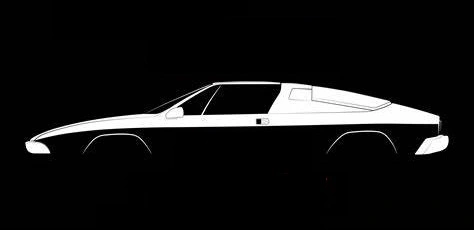
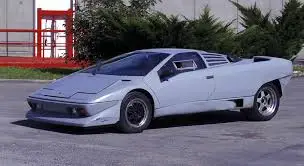
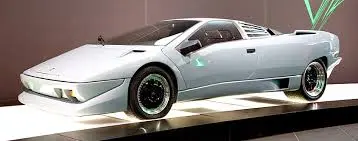
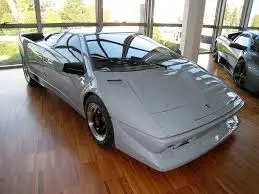
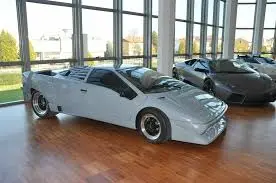
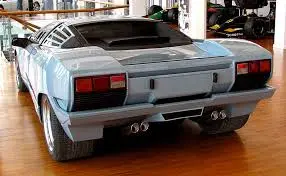
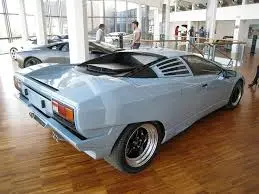
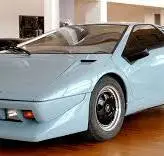
Chrysler’s influence steered the design toward its final shape. One full-size prototype, completed in 1987 and wearing a distinctly angular design penned by Marcello Gandini,
was the physical manifestation of the P132 vision, though it never bore a nameplate in showrooms.
Design : Gandini's Vision Meets Corporate Caution
Marcello Gandini, the maestro behind the Miura and Countach, was again commissioned to shape the P132. His design was bold, brutal, and unmistakably Lamborghini—wedge-shaped,with a wide stance, sharp creases, and dramatic air intakes. It looked like the future. However, when Chrysler took control of the brand, concerns about the design’s extreme
character led to modifications.
Gandini’s original P132 design was considered too radical for the American market, and Chrysler's design team softened the lines, creating the more refined yet still aggressive
look of the Diablo. Frustrated, Gandini distanced himself from the final product and eventually re-used the original P132 styling cues in the Cizeta V16T—a spiritual sibling of
the Lamborghini that never was.
Driving Experience : The Untested Bull
Because the P132 never made it to production, its driving characteristics remain speculative. However, internal documents and prototype specs suggest that the car was planned tohouse a development of Lamborghini’s legendary 5.7-liter V12 engine, mounted longitudinally and sending power to the rear wheels. Performance targets aimed at exceeding the
Countach's already formidable speed and agility, with better cooling, improved aerodynamics, and enhanced chassis rigidity.
Had it seen the light of day as originally envisioned, the P132 might have redefined Lamborghini's image even more radically than the Diablo did. It was to be more than a supercar,
it was Lamborghini's attempt at maturity without losing its madness.
Fun Facts : Behind the Curtains
- The P132 project started as early as 1985, well before Chrysler’s acquisition of Lamborghini.
- Gandini’s dissatisfaction with Chrysler’s interference in the design process led him to create the Cizeta V16T—virtually identical to his original P132 proposal.
- Only a handful of P132 prototypes were ever built, and most remained hidden within Lamborghini’s archives.
- One of the full-size models has been preserved and is occasionally displayed during factory tours or at special exhibitions.
Legacy : Foundations of the Diablo
The Lamborghini P132 may never have roared onto public roads, but its DNA runs deep through one of the most beloved Lamborghinis of all time—the Diablo. It represents the bridgebetween old-world Lamborghini wildness and the more refined, high-performance brand that would define the 1990s and beyond.
Though its name never graced a badge, the P132 played a critical backstage role. It’s a story of what could have been—and a reminder that even the shadows of Lamborghini’s history
cast powerful silhouettes.
Remark
Since the P132 was a prototype and never reached production, some specifications are based on internal targets and what is known from development documents and prototype data. Whereexact values are unavailable, reasonable estimates based on contemporary Diablo data are marked accordingly.
Specifications
| Category | |
|---|---|
| Prototype Year | 1987 |
| Build | 1 full-scale prototype (several models and mockups) |
| Designer | Marcello Gandini |
| Engine | 5.7L V12 DOHC, 48 valves |
| Power Output | ± 492 hp (367 kW) @ 7000 rpm (targeted) |
| Torque | ± 580 Nm (428 lb-ft) @ 5200 rpm (targeted) |
| Top Speed | ± 325 km/h (202 mph) (estimated) |
| Acceleration (0–100 km/h) | ± 4.5 seconds (estimated) |
| Length | 4460 mm (175.6 in) |
| Width | 2040 mm (80.3 in) |
| Height | 1100 mm (43.3 in) |
| Wheelbase | 2650 mm (104.3 in) |
| Weight | ± 1575 kg (3472 lbs) |
| Fuel Capacity | 100 L (26.4 US gal) |
| Wheel Type | Alloy, 17-inch (prototype specific) |
| Front Tires | 245/40 ZR17 (estimated) |
| Rear Tires | 335/35 ZR17 (estimated) |
| Tire Brand/Type | Pirelli P Zero (expected) |
| Chassis | Steel tubular spaceframe |
| Front Suspension | Double wishbones |
| Rear Suspension | Double wishbones |
| Brakes | Ventilated discs, all-round |