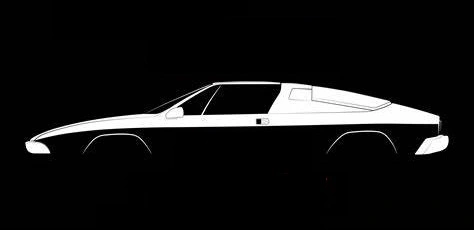





The Four-Door Supercar That Challenged Tradition
History : An Audacious Vision for a New Type of Lamborghini
In 2008, Lamborghini stunned the automotive world with the Estoque at the Paris Motor Show. This bold four-door sedan reimagined the brand’s DNA: aggressive styling, high-performance engineering,and a more practical, front-engined, four-seat layout. Named after the rapier-like sword used by Spanish matadors, the Estoque embodied precision, elegance, and latent power.
Built as a fully functional prototype, it rode on a unique platform and was powered by a naturally aspirated 5.2-liter V10 derived from the Gallardo. With its long wheelbase, spacious cabin,
and unmistakable Lamborghini character, the Estoque hinted at a broader market, bringing Lamborghini performance into a daily-drivable context.
The timing was challenging: the 2008 financial crisis delayed any production plans. Though the project never officially launched, the Estoque planted seeds that would later bloom in the Urus SUV,
Lamborghini’s first truly mass-market high-performance vehicle.
Design : Raging Bull Style Reimagined for Four Doors
Designed by Filippo Perini and the Centro Stile Lamborghini team, the Estoque translated the razor-sharp supercar DNA into a luxurious four-door sedan. Its proportions were elegant yet assertive,with a commanding stance over five meters long but just 1.35 meters tall.
Exterior highlights included:
- Sharp, angular front fascia with deep air intakes and Y-shaped LED headlights
- Bold hexagonal grille, reinforcing Lamborghini’s geometric language
- Strong shoulder line flowing from front to rear
- Tapered rear with quad exhausts, signaling performance in sedan form
- Massive turbine-inspired 22-inch wheels tucked under muscular arches
Interior highlights included:
- Four sculptural sport seats separating each occupant
- Full-length high center console integrating controls and storage
- Premium leather, Alcantara, carbon fiber accents, and contrasting stitching
- Futuristic, driver-focused dashboard with digital instrumentation
- Rear seats offering true comfort, completing its grand touring character
Driving Experience : Performance Sculpted for Long Distance Thrills
While the Estoque was never publicly driven, it was conceived as a high-performance Gran Turismo capable of combining speed, handling, and comfort. Expected performance mirrored Gallardo levels:0–100 km/h in around 4 seconds, top speed near 275 km/h, and all-wheel drive for confident control.
Lamborghini also explored multiple powertrain possibilities, including V8, turbocharged V8, and hybrid variants, emphasizing versatility and global appeal.
Fun Facts : Conceptual Boldness with Lasting Influence
- The Estoque continues Lamborghini’s tradition of bullfighting references in its name.
- It was Lamborghini’s first front-engine concept since the LM002 and the first four-door sedan since the Espada.
- Though never produced, its styling directly influenced the Lamborghini Urus SUV.
- Fully drivable as a prototype, yet never tested publicly by journalists.
- The prototype now resides in Lamborghini’s private collection at the Museo Lamborghini.
Legacy : The Blueprint for Lamborghini’s Modern Versatility
The Estoque remains a testament to Lamborghini’s willingness to defy tradition. It bridged supercar aggression with everyday usability, hinting at a future where Lamborghinis could combine luxury, performance,and practicality. While it never entered production, its spirit lives on in the Urus, proving that even a four-door Lamborghini can carry the raging bull DNA with uncompromised flair.


Specifications
| Category | |
|---|---|
| Prototype Year | 2005 |
| Build | 1 fully functional prototype |
| Designer | Luc Donckerwolke |
| Engine | 5.0L V10 |
| Power Output | 520 hp (388 kW) |
| Torque | 510 Nm (376 lb·ft) |
| Top Speed | ~315 km/h (196 mph) |
| 0-100 km/h (0-62 mph) | ~4.0 seconds |
| Transmission | 6-speed manual |
| Drivetrain | All-wheel drive (based on Gallardo) |
| Length | 4,300 mm (169.3 in) |
| Width | 1,900 mm (74.8 in) |
| Height | 1,160 mm (45.7 in) |
| Wheelbase | 2,560 mm (100.8 in) |
| Weight | ~1,380 kg (3,042 lbs) |
| Fuel Capacity | 90 L (23.8 US gal) |
| Wheels | Unique forged alloy wheels |
| Front Tires | 235/35 ZR19 |
| Rear Tires | 295/30 ZR19 |
| Tire Brand/Type | Pirelli P Zero |
| Chassis | Aluminum spaceframe with carbon fiber panels |
| Suspension | Independent double wishbone front and rear |
| Brakes | Ventilated disc brakes (ABS included) |