



The Grand Tourer with a V12 Soul
History : A Bold Four-seater Vision Comes to Life
In the 1960s, Lamborghini expanded its model range beyond the Miura and the 400 GT, aiming to create a fast, comfortable GT car thatcould accommodate four passengers while maintaining the brand’s signature performance. Inspired by the 1967 Lamborghini Marzal concept,
the Espada debuted at the 1968 Geneva Motor Show, offering a practical alternative to Lamborghini’s typical two-seater sports cars.
Over its ten-year production run, Lamborghini refined the Espada through three series:
Series I (1968–1970): Early models with 325 hp and a distinctive dashboard layout.
Series II (1970–1972): Improved interior, 350 hp, and better cooling.
Series III (1972–1978): Updated styling, optional automatic transmission, and power steering.
With 1,217 units produced, the Espada became one of Lamborghini’s most successful models of the era.
Design : Blend of Eelegance and Practicality
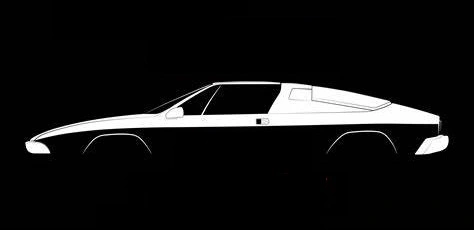
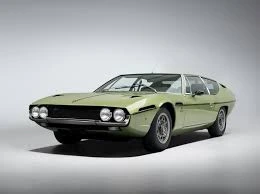
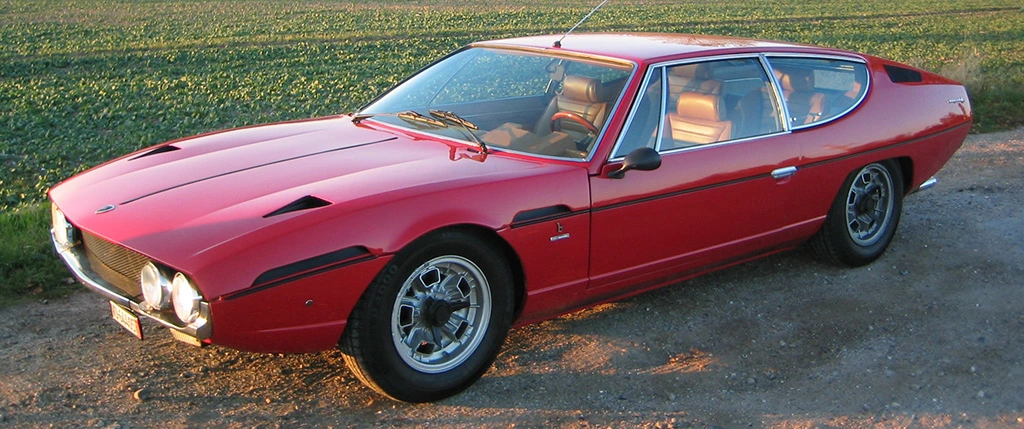
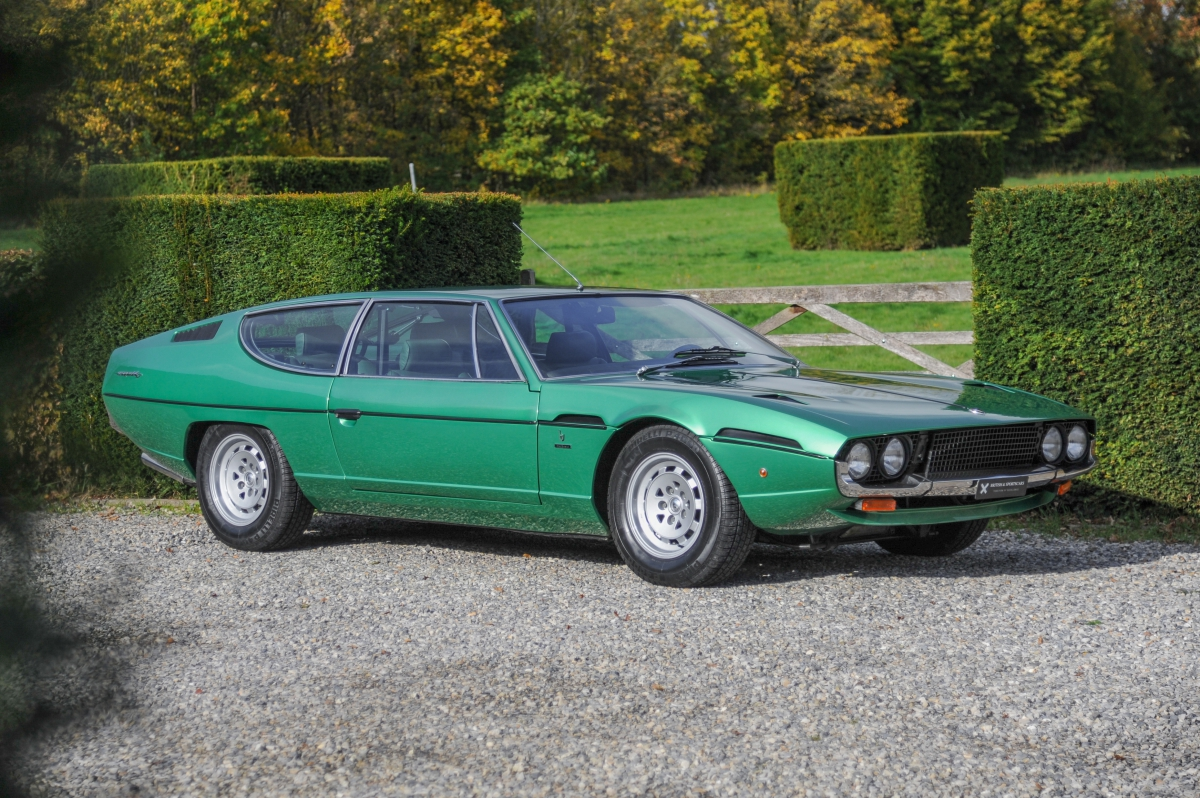
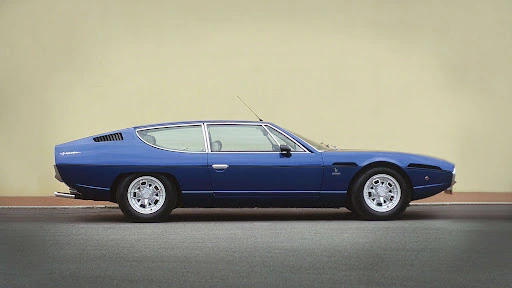
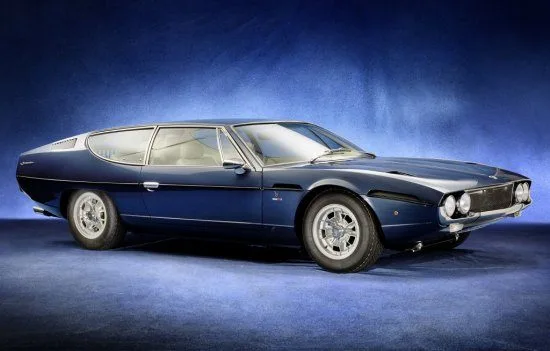
The Espada’s design, crafted by Marcello Gandini at Bertone, stands apart among Lamborghinis. Its low, wide stance, sharp angles, and long wheelbase giveit a commanding road presence. One of its most distinctive features is the large glass rear hatch, enhancing visibility and adding a futuristic flair.
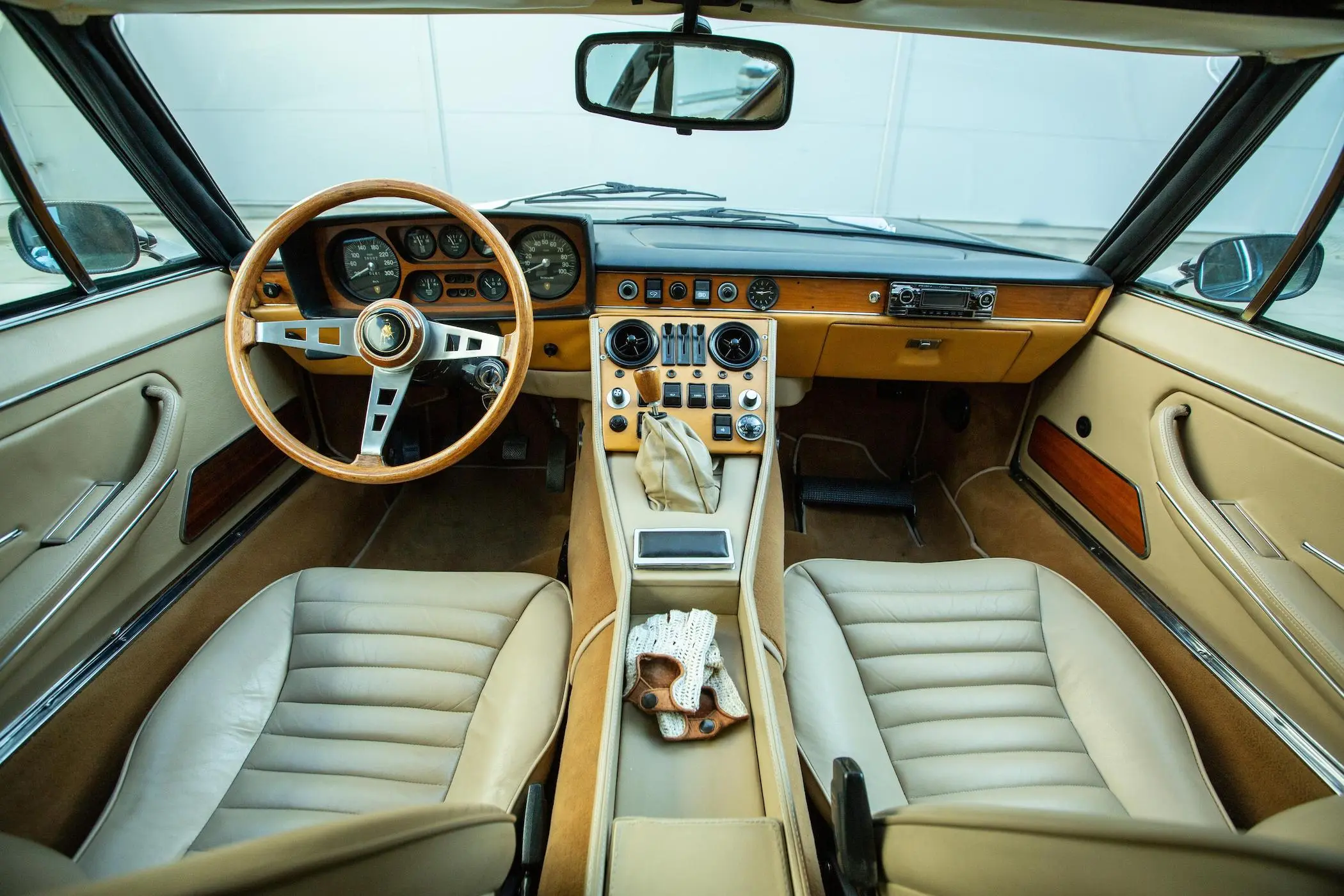
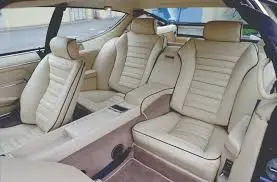
The interior prioritized comfort, with luxurious leather upholstery, a well-equipped dashboard, and ample space for four adults.
Later models introduced refined materials and optional power steering to enhance the driving experience.
Driving Experience : Performance and Comfort in Perfect Balance
Despite its grand touring nature, the Espada remained a true Lamborghini at heart. Its 3.9L V12 engine, producing up to 378 hp, delivered thrilling accelerationand a top speed of 245 km/h (152 mph). The five-speed manual gearbox offered an engaging experience, while the optional automatic transmission introduced
in Series III provided a more relaxed ride.
The double wishbone suspension ensured smooth handling, and four-wheel disc brakes offered confident stopping power.
Although larger and heavier than other Lamborghinis, it retained impressive agility for a four-seater GT.
Fun Facts : Stories that Made the Espada Legendary
- The Name: "Espada" means "sword" in Spanish, continuing Lamborghini’s tradition of bullfighting-inspired names.
- Marzal Connection: The Espada’s design drew heavily from the Marzal concept, including its glass-heavy layout and futuristic cues.
- Automatic First: The Series III Espada was Lamborghini’s first model available with an automatic transmission.
- Unique Interior: Early Espadas featured a hexagonal instrument cluster—a hallmark of Marcello Gandini’s design language.
- Royal Approval: Prince Rainier III of Monaco owned an Espada, further cementing its luxury GT status.
- Practical GT: Despite its performance credentials, the Espada offered a spacious trunk, making it highly practical for a Lamborghini.
- Movie Star: The Espada appeared in films and TV shows, including "The Man Who Haunted Himself" (1970) starring Roger Moore.
Legacy : Paving the Way for Future Four-seaters
The Espada remains a cult classic, admired for its bold design and daring concept. It influenced future four-seater Lamborghinis,from the LM002 to the Urus and even the Asterion concept.
Today, the Espada stands as proof that a four-seater grand tourer can carry the soul of a raging bull while embracing luxury and practicality.
Specifications
| Category | |
|---|---|
| Production | Series I 1968 - 1970 Series II 1970 - 1972 Series III 1972 - 1978 |
| Build | Series I 186 units Series II 575 units Series III 456 units |
| Designer | Marcello Gandini (Bertone) |
| Engine | 3.9L V12,naturally aspirated |
| Power Output | Series I 325 hp (242 kW) at 7,200 rpm Series II 350 hp (261 kW) at 7,500 rpm Series III 350 hp (261 kW) at 7,500 rpm |
| Torque | Series I Not specified Series II Not specified Series III 291 lb-ft (395 Nm) at 5,500 rpm |
| Transmission | 5-speed manual (3-speed automatic optional from 1974) |
| Drive Type | Rear wheel drive (RWD) |
| Acceleration (0-100 km/h / 0-62 mph) | Series I Not specified Series II Not specified Series III Approximately 6.6 seconds |
| Top Speed | Series I Not specified Series II Not specified Series III Approximately 250–260 km/h (155–162 mph) |
| Length | Series I 4674 mm (184.0 in) Series II 4740 mm (186.6 in) Series III 4740 mm (186.6 in) |
| Width | 1860 mm (73.2 in) |
| Height | 1185 mm (46.7 in) |
| Wheelbase | 2650 mm (104.3 in) |
| Weight | Series I 1480 kg (3263 lbs) Series II 1700 kg (3748 lbs) Series III 1635 kg (3605 lbs) |
| Fuel Capacity | ~95 L (25.1 US gal) |
| Wheel Type | 15 inch Campagnolo knock-off hubs or 15 inch Campagnolo five-bolt hubs (Series III) |
| Front and rear tires | 215/70 VR15 |
| Tires | Pirelli Cinturato CN72 |
| Chassis | Pressed steel monocoque |
| Front Suspension | Double wishbone with coil springs |
| Rear Suspension | Independent, double wishbone |
| Brakes | Series I Solid disc brakes (front and rear) Series II Vented Girling disc brakes (front and rear) Series III Vented Girling disc brakes (front and rear) |