



The Prototype That Launched a Legacy
History : The Moment Lamborghini Announced Itself to the World
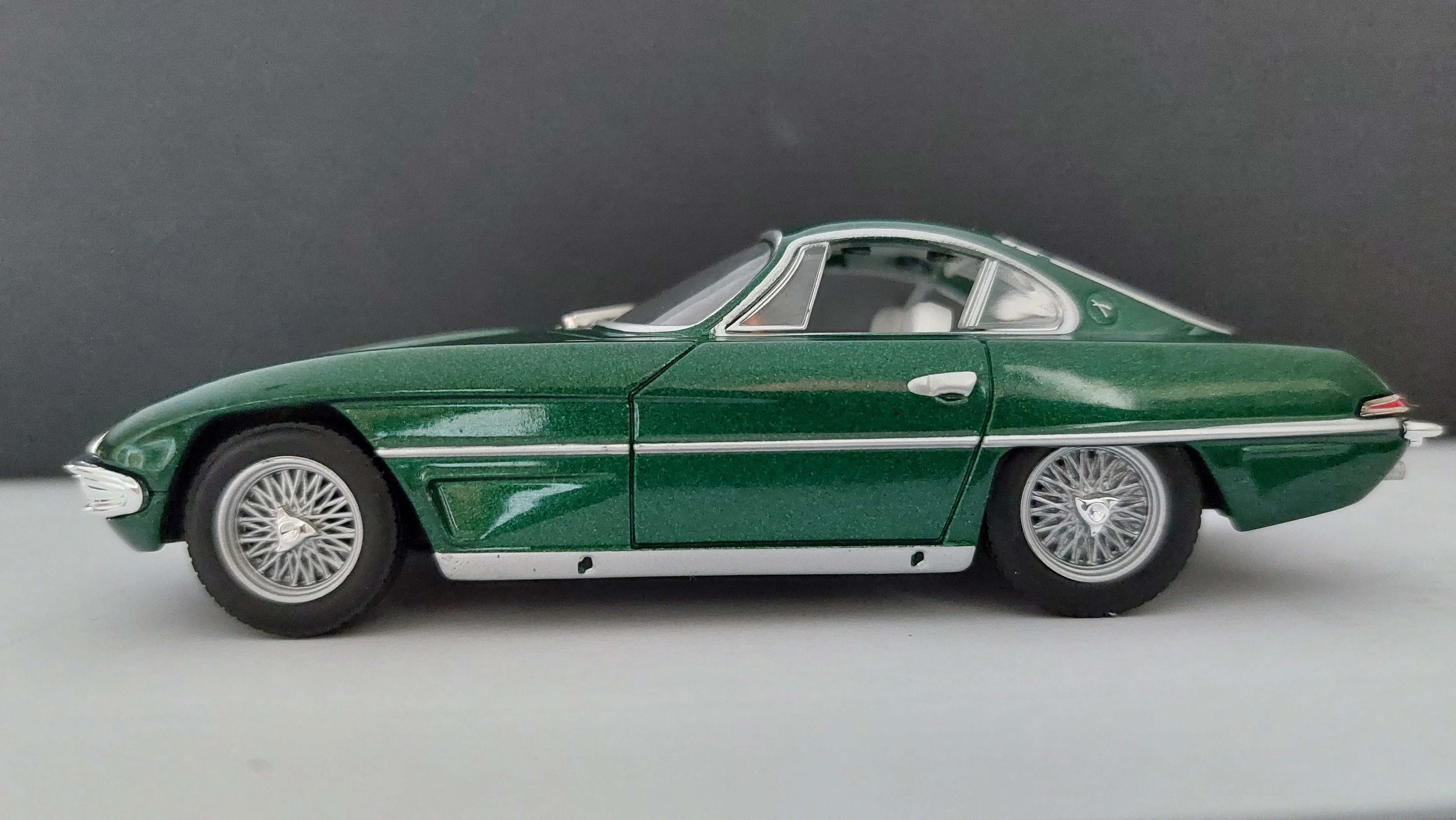
Before Lamborghini became a household name among exotic car enthusiasts, it all began with a bold idea—and an even bolder prototype. The Lamborghini 350 GTV, unveiled at the 1963 Turin Auto Show,was Ferruccio Lamborghini’s declaration to the automotive world: he was not merely building another sports car, he was redefining what a grand tourer could be.
Styled by Franco Scaglione and built by Carrozzeria Sargiotto, the 350 GTV combined dramatic, forward-looking design with advanced mechanical ambition. Beneath its long aluminum hood sat a newly
developed 3.5-liter V12, created by Giacomo Paolo Dallara and Gian Paolo Stanzani under the guidance of legendary engineer Giotto Bizzarrini. This was not simply an engine;
it was a statement of intent, producing a claimed 360 horsepower at 9,000 rpm—figures more commonly associated with contemporary racing machinery than road cars.
Yet the GTV was far from production-ready. The car displayed in Turin famously lacked an engine beneath its hood—reportedly due to last-minute fitment issues—and its exaggerated styling was considered
too radical for series production. Still, it achieved its purpose: it captured attention, generated intrigue, and proved that Lamborghini’s ambitions were entirely genuine.
Design : An Uncompromising Vision of Speed, Elegance, and Ambition
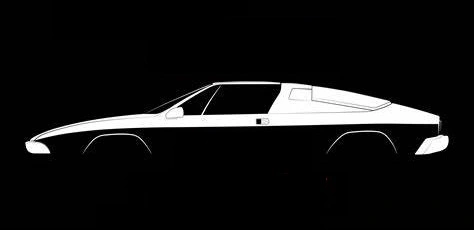
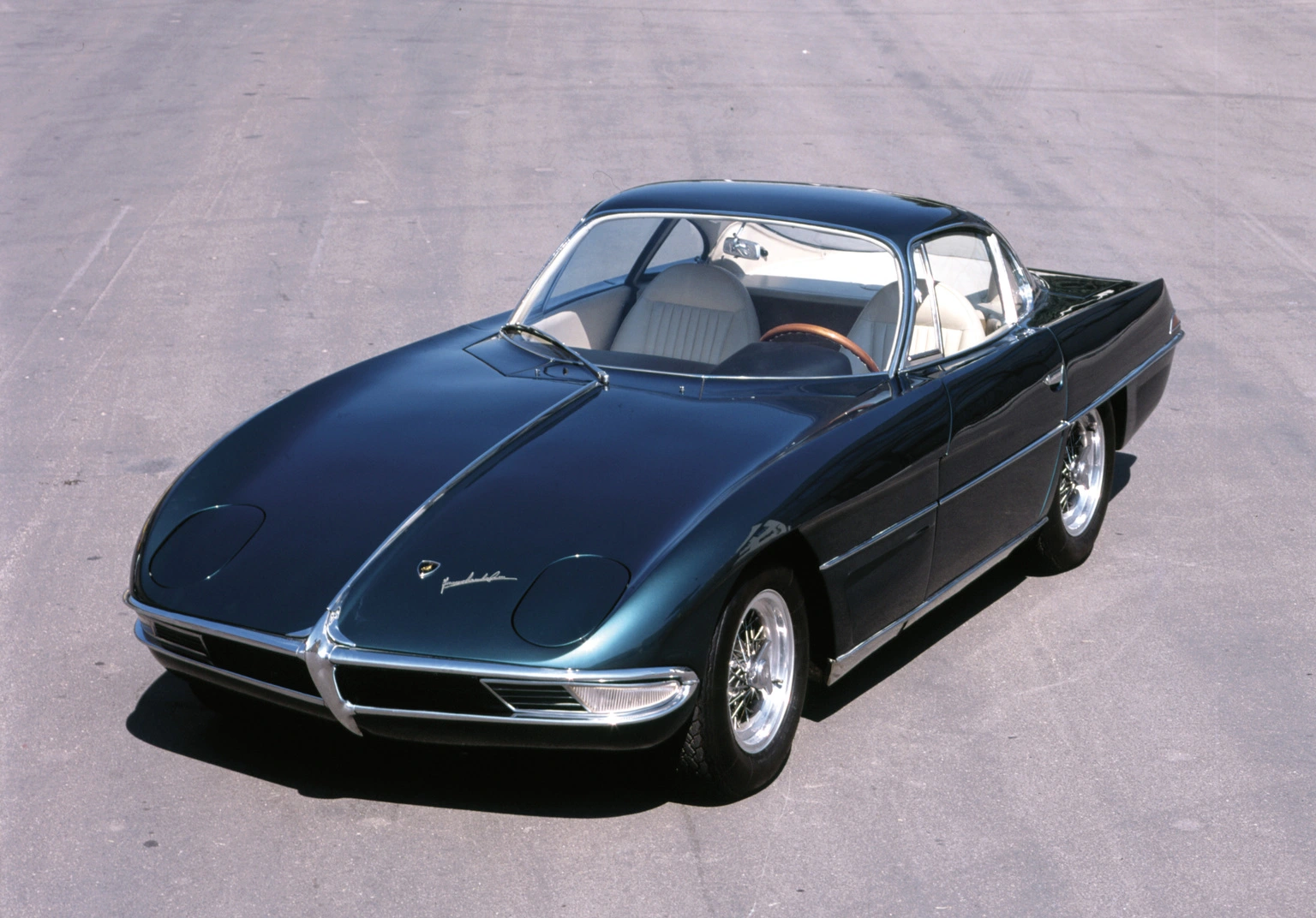
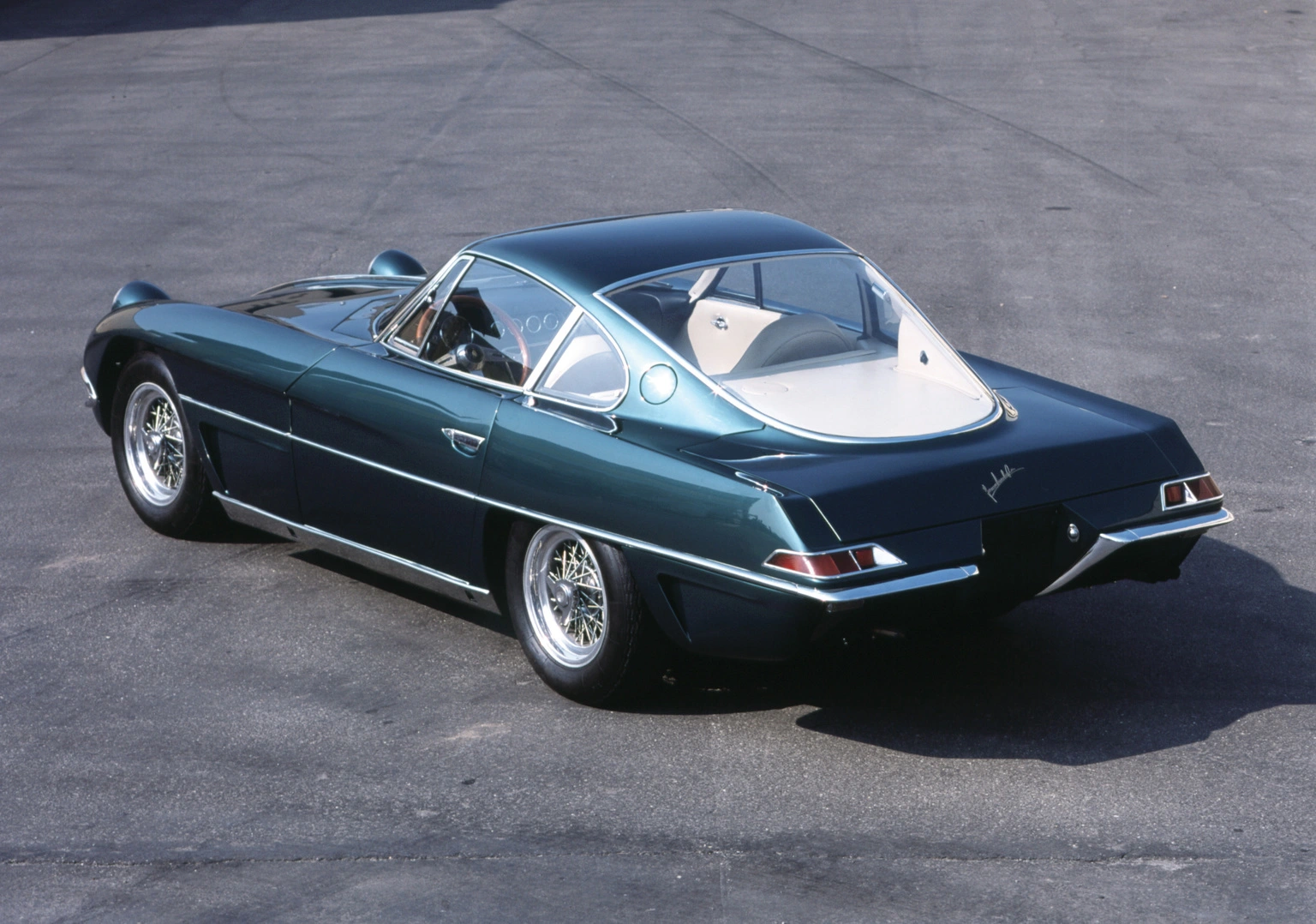
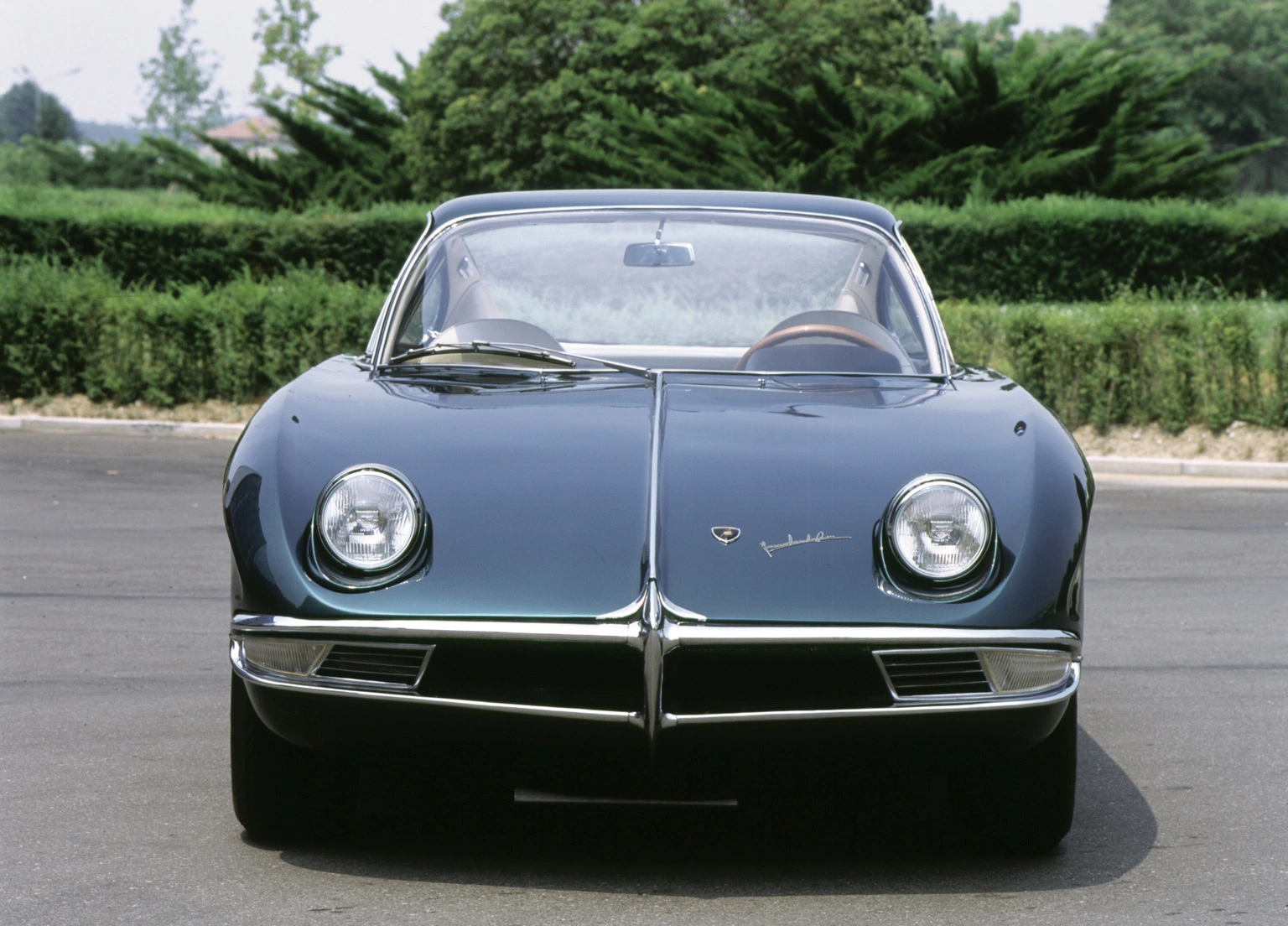
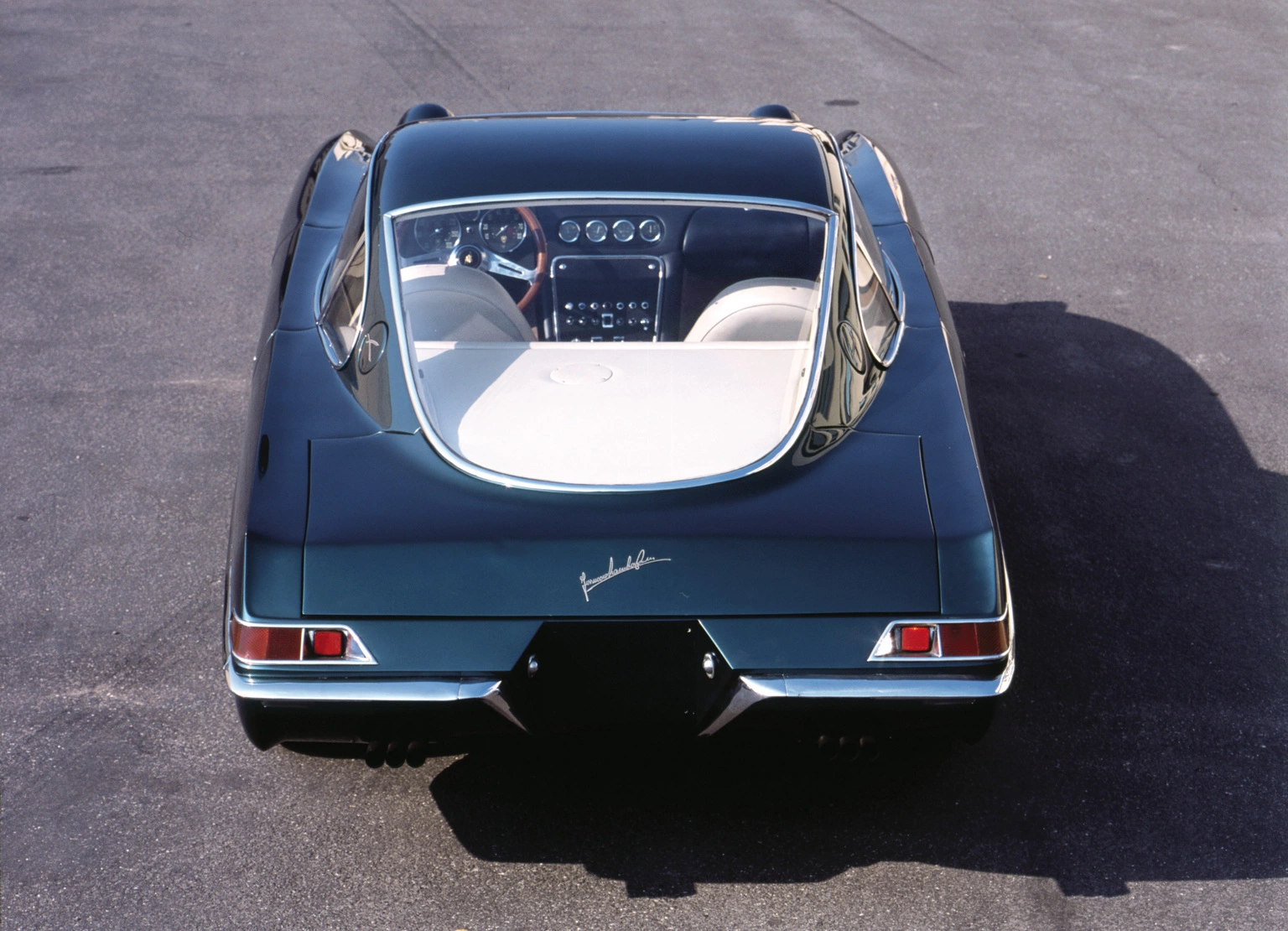
Franco Scaglione’s design for the 350 GTV was anything but restrained. The low-slung coupé featured a long, sloping hood, sharply creased body lines, and a fastback-style rear that gave it afuturistic and purposeful profile. Pop-up headlights, deeply recessed into the fenders, added a sense of technical sophistication rarely seen in early-1960s automotive design.
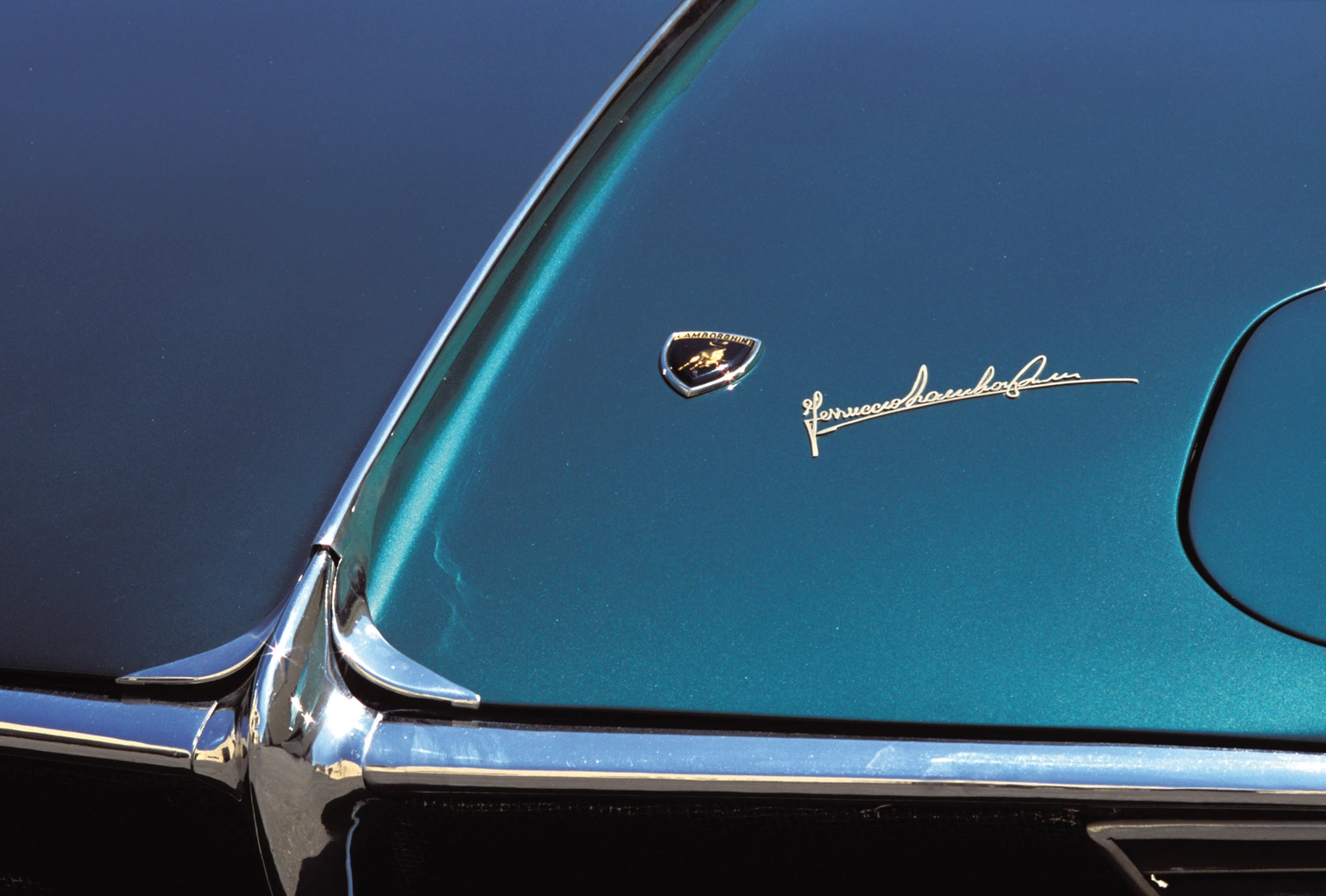
The proportions were daring, with a pronounced front overhang and wide stance that hinted at serious performance. Chrome accents along the grille and window surrounds provided elegance,
while the full clamshell hood and rear section made the car appear closer to a racing prototype than a conventional road-going GT. Deeply inset wheels and functional air vents along the flanks
reinforced its high-performance character.
Despite its striking presence, many of these features were deemed too extreme for production. The subsequent 350 GT retained the core proportions of the GTV but translated them into a more refined,
practical, and market-ready form.
Driving Experience : A Promise of Performance Rather than a Completed Reality
The Lamborghini 350 GTV was never officially driven in public, and only a single prototype was ever constructed. Nevertheless, its mechanical philosophy directly shaped the Lamborghini 350 GT,the company’s first production model. Had it been fully developed for road use, the GTV would likely have delivered exceptional performance for its era, thanks to its lightweight construction
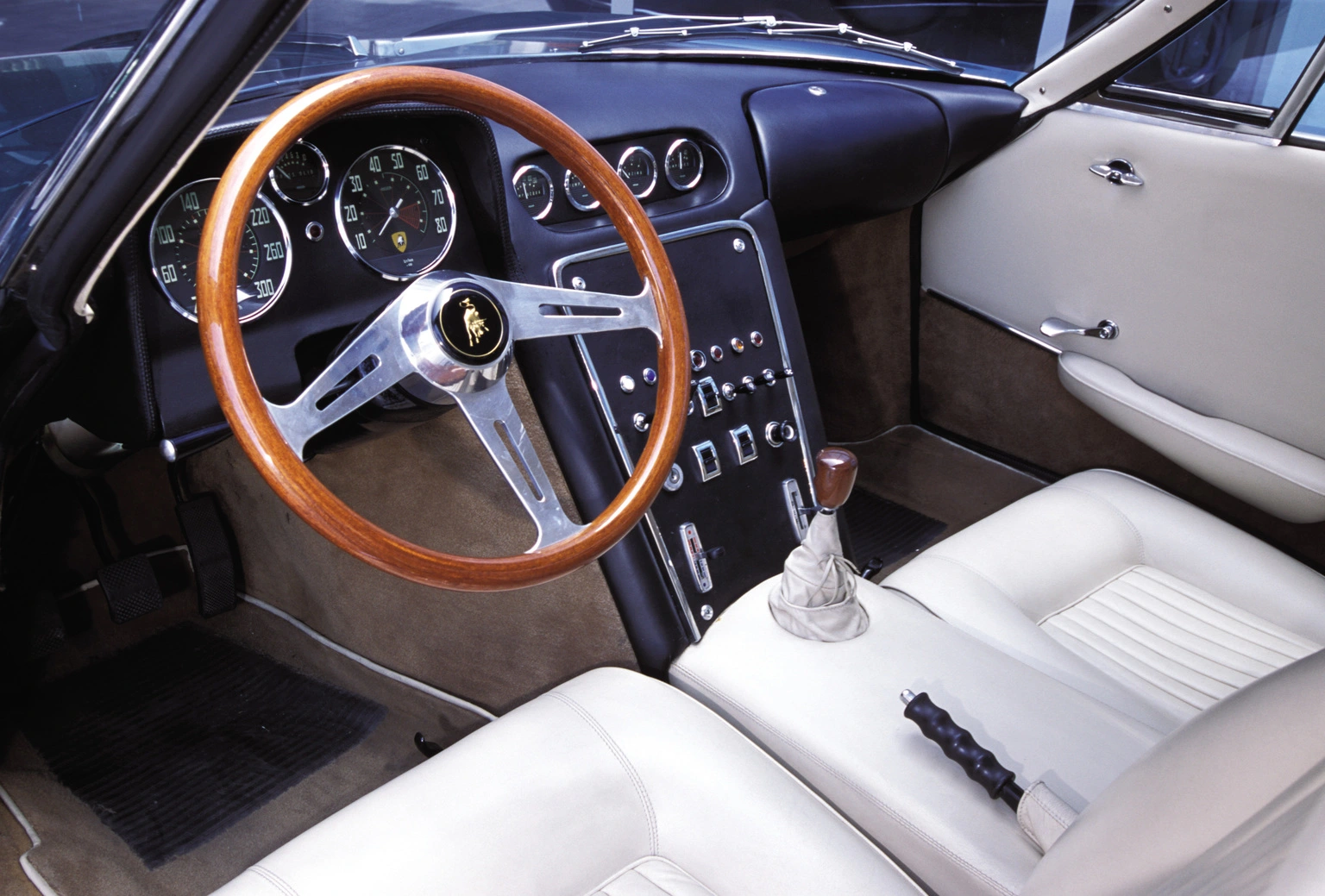
and high-revving V12 engine. It was conceived as a true driver’s car, blending racing-inspired engineering with the comfort expected of a grand tourer.
Fun Facts : Unfinished, Unconventional, Unforgettable
- The 350 GTV’s engine was displayed separately at the Turin Auto Show, as it would not fit beneath the hood due to the prototype’s rushed and unfinished state.
- After its debut, the car remained incomplete for many years and was kept in storage.
- In the 1990s, the prototype was restored under the direction of Tonino Lamborghini, repainted in a striking metallic blue and modified to properly accommodate its V12 engine.
Legacy : The spark that ignited the Lamborghini legend
Although only a single 350 GTV was ever built, it remains one of the most important cars in Lamborghini history. It embodied the company’s founding principles: bold engineering, daring design,and an unyielding desire to challenge established norms. The 350 GTV was not merely a concept—it was the foundation upon which the Lamborghini name was built.
Today, the 350 GTV can be seen at the Museo Ferruccio Lamborghini in Bologna, Italy.
Specifications
| Category | |
|---|---|
| Production | 1963 (prototype only) |
| Build | 1 unit |
| Designer | Franco Scaglione |
| Engine | 3.5L V12 (Tipo 103) |
| Power Output | ~360 hp (268 kW) @ 8,000 rpm |
| Torque | ~326 Nm (240 lb-ft) @ 6,000 rpm |
| Transmission | 5-speed manual |
| Acceleration (0-100 km/h / 0-62 mph) | Not officially tested |
| Top Speed | ~250 km/h (155 mph) |
| Length | 4640 mm (182.7 in) |
| Width | 1730 mm (68.1 in) |
| Height | 1220 mm (48.0 in) |
| Wheelbase | 2550 mm (100.4 in) |
| Weight | ~980 kg (2160 lbs) |
| Fuel Capacity | ~100 L (26.4 gallons) |
| Tires | Pirelli Cinturato |
| Chassis | Steel tubular frame with aluminum body panels |