



Zagato’s Untamed Vision of Lamborghini’s Future
History : A Concept Born from Collaboration
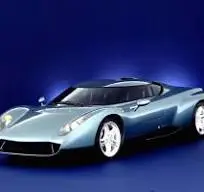
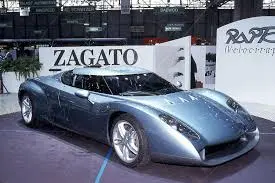
Unveiled at the 1996 Geneva Motor Show, the Lamborghini Zagato Raptor was the bold result of a collaboration between Lamborghini and the renowned Italian design houseZagato. The project was initiated as an exploration of what a lightweight, high-performance Lamborghini could look like, something between a concept car and a
production ready supercar. Built on the chassis and underpinnings of the Lamborghini Diablo VT, the Raptor retained Lamborghini’s 5.7-liter V12 but offered a drastically
different approach to bodywork and styling.
Zagato’s expertise in aerodynamic form and aggressive minimalism came together with Lamborghini’s engineering prowess to create a car that, while never intended for mass
production, was remarkably functional and drivable. There was even brief consideration of producing the Raptor in limited numbers as a potential Diablo successor, but internal
shifts at Lamborghini—particularly Audi’s impending acquisition—meant the Raptor remained a one-off.
Design : Where Sharp Meets Smooth
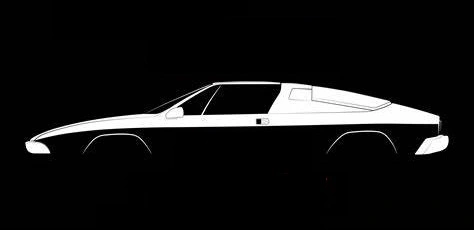
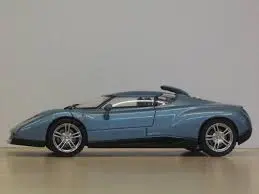
The Raptor’s design is unmistakably Zagato, characterized by flowing curves, a teardrop cabin, and bold, angular lines. The most distinctive feature is the innovativecanopy-style roof and scissor doors, which pivot forward and up as a single unit. This signature element not only gave the Raptor its futuristic presence but also simplified
ingress and egress.
Zagato’s signature double-bubble roof was subtly integrated into the canopy, enhancing headroom while maintaining the car’s low-slung profile. Constructed from lightweight
carbon fiber and lacking ABS or traction control, the Raptor was focused on weight reduction, around 300 kg lighter than the Diablo VT, while still offering all-wheel drive.
The wheels, too, were bespoke Zagato designs, adding to the prototype’s distinct identity.
Driving Experience : Diablo Power, Sharpened
Under the skin, the Raptor retained the 5.7L V12 engine from the Diablo VT, producing around 492 hp. But with its lightweight carbon-fiber construction and the removal ofelectronic driving aids, the Raptor offered a purer, more visceral experience.
The absence of ABS or traction control meant the driver was in full command at all times, a throwback to Lamborghini’s rawer heritage. With all-wheel drive and a lighter frame,
the Raptor promised sharper handling and greater agility compared to its Diablo sibling. Though only driven sparingly, those who experienced it noted its immediacy and sense
of unfiltered connection between machine and road.
Fun Facts : From Concept to Cult Icon
- The Raptor’s full name was **Lamborghini Raptor Zagato**, though it is often simply referred to as the “Zagato Raptor.”
- The entire canopy structure—roof, doors, and windshield—was a single hinged piece, a rare solution in automotive design.
- Despite its concept status, the Raptor was a fully functional prototype, complete with a working drivetrain and road-capable components.
- After its debut, the Raptor was featured in several magazines and television features, quickly gaining cult status among Lamborghini fans.
- The one-off prototype still exists and has been auctioned at least once, maintaining interest as a collector’s dream piece.
Legacy : A Glimpse at What Might Have Been
Though the Raptor never reached production, its influence lingered. It represented a stylistic bridge between the 1990s-era Diablos and the sharper, more forward-thinking designsLamborghini would embrace in the 2000s under Audi’s stewardship.
Zagato’s take on Lamborghini performance was both respectful of tradition and boldly progressive. The Raptor remains a unique chapter in Lamborghini’s history, an exotic blend of
form and function that still turns heads and sparks imagination decades after its debut.
Following its unveiling, the Raptor was offered for sale by Bonhams at the 2000 Geneva Motor Show, though it did not sell at auction. Over the years, the car changed hands
privately and is now believed to reside in a private collection. Its rarity, fully functional build, and radical Zagato design have made it a cult favorite among collectors
and enthusiasts alike, an elusive prototype that continues to captivate with its untamed presence.



Specifications
| Category | |
|---|---|
| Prototype Year | 1996 |
| Build | 1 prototype (fully functional) |
| Designer | Norihiko Harada from Zagato |
| Engine | 5.7L V12 |
| Power Output | 492 hp (367 kW) |
| Torque | 580 Nm (428 lb·ft) |
| Top Speed | ~330 km/h (205 mph) |
| Acceleration | 0–100 km/h in ~4.0 sec (0–62 mph) |
| Transmission | 5-speed manual |
| Drive | All-wheel drive (based on Diablo VT) |
| Length | ~4,470 mm (176 in) |
| Width | ~2,050 mm (80.7 in) |
| Height | ~1,100 mm (43.3 in) |
| Wheelbase | 2,650 mm (104.3 in) |
| Weight | ~1,380 kg (3,042 lbs) |
| Fuel Capacity | 100 L (26.4 US gal) |
| Wheels | Zagato custom alloy wheels |
| Front Tires | 245/35 ZR18 |
| Rear Tires | 335/30 ZR18 |
| Tire Brand/Type | Pirelli P Zero |
| Chassis | Carbon fiber body on Diablo VT platform |
| Suspension | Independent front and rear suspension |
| Brakes | Ventilated disc brakes (no ABS) |