


The Underrated Baby Bull
History : A Little Bull with Big Aspirations
The Lamborghini Urraco is often overshadowed by its more famous siblings, but this 2+2 mid-engine sports car played a crucial role in Lamborghini’s history.Introduced in the early 1970s, it was Lamborghini’s answer to the Ferrari Dino and Porsche 911, offering an exotic Italian experience in a more practical package.
The Urraco was first unveiled at the 1970 Turin Auto Show, designed to be a more affordable Lamborghini that could compete in the growing market of high-performance
sports cars. Production began in 1972 and continued until 1979, with around 791 units built in total. Unlike the Miura and Countach, which had large V12 engines,
the Urraco was powered by a V8, making it Lamborghini’s first production V8-powered car.
The name “Urraco” follows Lamborghini’s tradition of naming cars after fighting bulls, specifically a breed known for its agility and strength.
The Urraco went through three main variants:
P200: Introduced in 1975 for the Italian market, with a 2.0-liter V8 producing 182 hp.
P250: The original model from 1972, featuring a 2.5-liter V8 with 220 hp.
P300: Launched in 1975 with a 3.0-liter V8, increasing power to 250 hp and improving reliability.
Design : Gandini’s Wedge Goes Compact
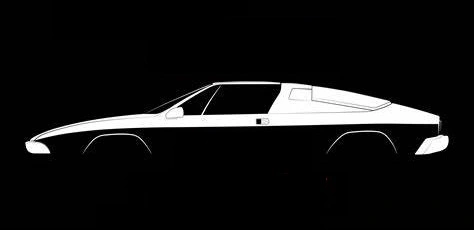
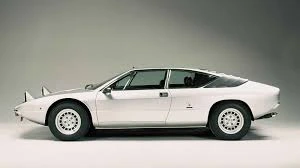
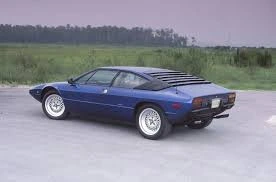
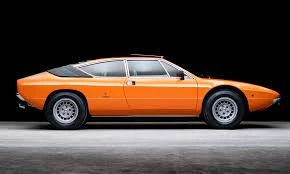
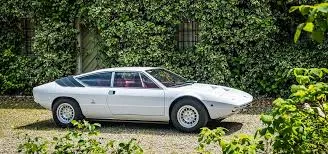
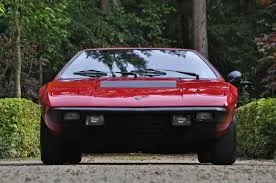
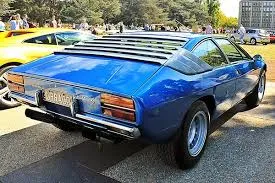
Penned by Marcello Gandini at Bertone, the Urraco had a wedge-shaped body that defined Lamborghini’s aesthetic during the 1970s. Its sharp lines,louvered rear engine cover, and pop-up headlights gave it a distinctive and aggressive look. Unlike other Lamborghinis of the time, the Urraco had a 2+2 seating arrangement,
making it more practical than its pure two-seater counterparts.
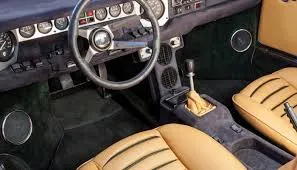
The interior featured a driver-focused dashboard, deep-set gauges, and a classic gated manual shifter. Early models had quality issues, particularly with electrics and ergonomics,
which were later improved in the P300 version.
Driving Experience : Precision Over Brutality
With a lightweight chassis and mid-engine layout, the Urraco offered an engaging driving experience. The V8 engine, paired with a 5-speed manual transmission,delivered lively acceleration, and the car’s handling was sharp thanks to its independent suspension and well-balanced weight distribution.
While it wasn’t as brutally fast as the Countach or as revolutionary as the Miura, the Urraco provided a more approachable and enjoyable drive. Reliability was a challenge,
with electrical gremlins and carburetor tuning requiring frequent attention.
Fun Facts : The Underdog of the Bullpen
- The Urraco’s name references a breed of fighting bulls, known for its tenacity.
- The dashboard featured a unique, curved instrument panel designed to wrap around the driver.
- Only 21 examples of the Urraco P200 were made, exclusively for the Italian market due to tax regulations based on engine displacement.
- The Urraco directly influenced later Lamborghini models like the Silhouette and Jalpa.
- Some consider the Urraco to be the spiritual predecessor to the Gallardo, as it was Lamborghini’s first “entry-level” model.
- James May of Top Gear famously praised the Urraco for its raw driving experience, despite its flaws.
Legacy : A Forgotten Pioneer
The Lamborghini Urraco may not have achieved the legendary status of the Miura or Countach, but it laid the groundwork for the brand’s future entry-level sports cars.It introduced new engineering concepts, opened the door to a broader audience, and showed that Lamborghini could deliver practical design and driving enjoyment in a more compact package.
Its bold design, innovative approach, and engaging driving dynamics make it a fascinating classic. Today, the Urraco is a collector’s gem, appreciated
for its uniqueness and the role it played in shaping Lamborghini’s future.
Specifications
| Category | |
|---|---|
| Production | P200 1975 - 1979 P250 1972 - 1976 P300 1975 - 1979 |
| Build | P200 66 units P250 520 units P300 190 units |
| Designer | Marcello Gandini (Bertone) |
| Engine | P200 2.0L V8, DOHC P250 2.5L V8, DOHC P300 3.0L V8, DOHC |
| Power Output | P200 182 hp at 7,500 rpm P250 220 hp at 7,500 rpm P300 250 hp at 7,500 rpm |
| Torque | at 3,500 rpm |
| Transmission | 5-speed manual |
| Drive Type | Rear wheel drive (RWD) |
| Acceleration (0-100 km/h / 0-62 mph) | P200 7.2 sec P250 6.9 sec P300 5.6 sec |
| Top Speed | P200 215 km/h (134 mph) P250 230 km/h (143 mph) P300 250 hm/h (155 mph) |
| Length | 4250 mm (167.3 in) |
| Width | 1765 mm (69.5 in) |
| Height | 1150 mm (45.3 in) |
| Wheelbase | 2450 mm (96.5 in) |
| Weight | 1130 kg (2491 lbs) |
| Fuel Capacity | 80 liters (21.1 US gal) |
| Wheel Type | 14-inch Campagnolo alloy wheels |
| Front and rear tires | 195/70 VR14 (front) - 205/70 VR14 (rear) |
| Tires | Pirelli Cinturato |
| Chassis | Steel monocoque with subframes |
| Front Suspension | Independent, MacPherson struts, coil springs |
| Rear Suspension | Independent, MacPherson struts, coil springs |
| Brakes | Ventilated disc brakes (front and rear) |