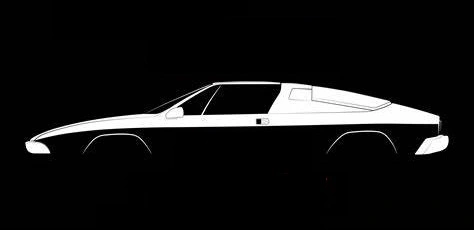





The World’s First Supercar
History : The Birth of an Entirely New Category
In 1966, Lamborghini stunned the automotive world with the unveiling of the Miura — a car that redefined what a high-performance road vehicle could be.Developed by a team of young engineers working after hours, the Miura was a radical departure from the norm, featuring a transverse mid-engine layout more
common in race cars than in road-going GTs. It was the world’s first true supercar, and it didn’t just raise the bar — it created an entirely new category.
The Miura was the brainchild of Gian Paolo Dallara, Paolo Stanzani, and Bob Wallace, under the bold leadership of Ferruccio Lamborghini. The car’s chassis
was revealed at the 1965 Turin Auto Show, while the final bodywork—designed by the young Marcello Gandini at Bertone—made its debut in Geneva the following year.
Instantly captivating audiences, the Miura became an automotive icon almost overnight.
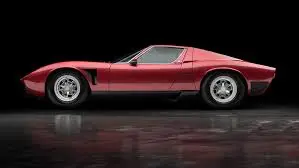
In 1970, Lamborghini test driver Bob Wallace created a one-off experimental version known as the Miura Jota. Built as a lightweight, track-focused evolution,
the Jota featured aluminum bodywork, extensive weight reduction, suspension upgrades, and engine modifications. Though never intended for production,
it revealed the Miura’s full performance potential and inspired several customer-commissioned SVJ models. Tragically, the original Jota was destroyed
in a crash, but its legend remains firmly embedded in Lamborghini history.
Design : A Sculptural Masterpiece Shaped by Performance
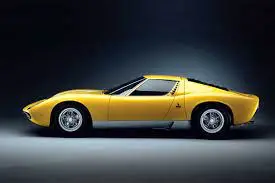
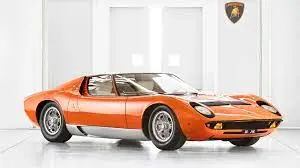
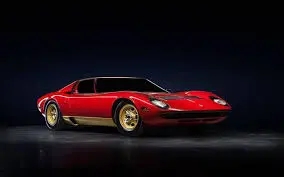
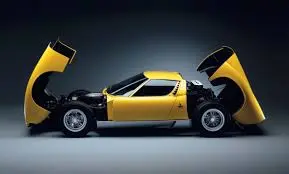
The Miura was more than fast—it was visually breathtaking. Its low-slung silhouette, dramatic curves, and signature “eyelash” headlight surrounds made itan instant masterpiece of automotive design. The compact, purposeful form was dictated by its mid-engine layout, giving the Miura an aggressive yet elegant stance.
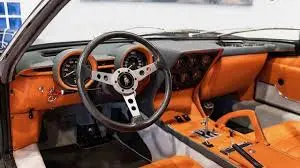
Inside, the cockpit was snug but stylish, featuring a wraparound dashboard and bucket seats that emphasized the car’s sporting intent.
The Miura’s beauty was far more than skin-deep. Every line and surface worked in harmony to create an emotionally compelling grand tourer that looked just as fast
as it felt. The SV version introduced in 1971 refined the design further with subtle changes to the headlights, tail section, and wider rear fenders.
Driving Experience : Raw, Intoxicating, and Demanding Respect
Driving a Miura was unlike anything else of its era. With its 3.9-liter V12 engine mounted transversely just behind the driver, the car delivered sensationalhandling and performance. The original Miura P400 produced 350 hp, with the P400S and P400SV offering even more power—up to 385 hp in the SV.
The Miura could accelerate from 0–100 km/h in under 6 seconds and reach a top speed of around 280 km/h (174 mph), placing it firmly at the pinnacle of its time.
Yet the Miura was never just about figures. The sound of the V12, the responsiveness of the chassis, and the intense connection between driver and machine
created a visceral, unforgettable experience. It demanded skill and respect, rewarding confident drivers with pure mechanical exhilaration.
Fun Facts : Stories behind the legend
- The Miura’s transverse engine layout was inspired by the Mini Cooper and helped reduce the car’s overall length.
- Ferruccio Lamborghini initially opposed the Miura project, preferring refined GT cars, but was quickly convinced by its overwhelming reception.
- Approximately 764 Miuras were built, making it one of the rarest and most sought-after Lamborghinis ever produced.
- The Miura starred in the opening sequence of the 1969 film The Italian Job, cementing its place in automotive pop culture.
- A small number of Miura SVJ models were later built as tributes to the legendary Jota.
Legacy : The Blueprint for Every Supercar that Followed
The Miura changed everything. It didn’t just put Lamborghini on the map—it reshaped it entirely. Its revolutionary layout, breathtaking design, and extraordinaryperformance established a new benchmark for supercars that continues to influence automotive design to this day.
Today, the Miura is widely regarded as one of the most important cars ever built. A true milestone in automotive history, it continues to inspire enthusiasts,
collectors, and designers around the world. Whether as a museum centerpiece, investment icon, or ultimate driving dream, the Miura remains the beating heart
of the Lamborghini legend.
Specifications
| Category | |
|---|---|
| Production | 1966 – 1973 |
| Build | P400 – 275 units P400S – 338 units P400SV – 150 units |
| Designer | Marcello Gandini (Bertone) |
| Engine | 3.9 L (3929 cc) V12, DOHC, transverse-mounted |
| Power Output | P400 – 350 hp (261 kW) @ 7,000 rpm P400S – 370 hp (276 kW) @ 7,000 rpm P400SV – 385 hp (287 kW) @ 7,850 rpm |
| Torque | 400 Nm (295 lb-ft) @ 5,000 rpm |
| Transmission | 5-speed manual |
| Drive Type | Rear wheel drive (RWD) |
| Acceleration (0-100 km/h / 0-62 mph) | Approx. 5.8 seconds (SV) |
| Top Speed | ~280 km/h (174 mph) |
| Length | 4360 mm (171.7 in) |
| Width | 1780 mm (70.1 in) |
| Height | 1050 mm (41.3 in) |
| Wheelbase | 2500 mm (98.4 in) |
| Weight | 1292 kg (2849 lbs) |
| Fuel Capacity | 85 L (22.5 US gallons) |
| Wheel Type | 15 inch Campagnolo alloy wheels |
| Front and rear tires | 215/70 VR15 (SV featured wider rear tires) |
| Tires | Originally fitted with Pirelli Cinturato |
| Chassis | Steel monocoque with rear subframe |
| Front Suspension | Independent, wishbones, coil springs, anti-roll bar |
| Rear Suspension | Independent, wishbones, coil springs, anti-roll bar |
| Brakes | 4-wheel disc brakes (ventilated in SV) |