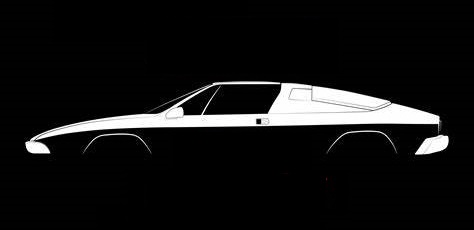





Devilishly Bold
History : The Birth of a Devil
Few names strike as much fear, admiration, and nostalgia in the supercar world as Diablo. Born at the dawn of the 1990s, it was the last Lamborghini developedbefore the company was taken over by Audi, and it shows. Raw, untamed, and brutally fast, the Diablo wasn’t just a car, it was a statement of intent.
Following the end of the Countach’s legendary run, Lamborghini needed a worthy successor—something just as outrageous, but ready for the 1990s. The Diablo project
began in the mid-1980s, with Marcello Gandini once again penning the initial design. His aggressive wedge theme continued, but Chrysler, who had bought Lamborghini
in 1987, softened the sharpest angles for broader appeal.
After years of development, the Lamborghini Diablo was unveiled on January 21, 1990 in Monte Carlo. It was the fastest production car in the world at launch,
with a 5.7L V12 and a top speed over 325 km/h. The name, meaning "devil" in Spanish, was inspired by a legendary 19th-century fighting bull.
Driving Experience : Driving the Devil
Driving a Diablo is not for the faint of heart. From the start, it retained the Countach’s brutal character: heavy controls, limited visibility, and a cockpit thatfelt more fighter jet than road car.
But it wasn’t just theatre—the Diablo was fast. Very fast. The V12 screamed with fury, and early models were pure rear-wheel-drive monsters. As updates arrived, the
car became more refined. With the introduction of all-wheel drive in the VT (Viscous Traction) models, it gained better handling, but never lost its savage edge.
Inside, leather-wrapped luxury met analog madness. Gauges, toggle switches, and a gated shifter reminded you this was a true driver’s car,not a tech-laden cruiser.
Diablo Through the Years
Diablo (1990–1998)Rear-wheel drive, 5.7L V12 with 485 hp
No power steering, no ABS, raw and mechanical
Top speed: 325 km/h
Diablo VT (1993–1998)
All-wheel drive, improved comfort and drivability
Power steering added, along with revised suspension
A true GT car for the brave
Diablo SE30 (1994–1995)
Special edition for Lamborghini’s 30th anniversary
Lighter, more focused, 523 hp
Some had purple paint, race-spec interiors, and carbon fiber elements
Diablo SV (1995–1999)
Rear-wheel drive only, more aggressive setup
510 hp, massive rear wing, and sportier stance
SV = Super Veloce (“Super Fast”)
Diablo VT Roadster (1995–1999)
First open-top Lamborghini since the Miura Roadster concept
Removable roof panel and improved interior trim
Show-stopping looks and V12 wind-in-your-hair madness
Diablo GT (1999)
Street-legal race car: 6.0L V12 with 575 hp
Wide-body design, stripped interior, carbon fiber galore
Only 80 units produced
Diablo VT 6.0 / 6.0 SE (2000–2001)
Final evolution under Audi ownership
Heavily reworked with refined chassis, updated styling, and 550 hp
Marked the transition toward the Murciélago
Parallel Production – Diablo & VT
When Lamborghini introduced the Diablo VT in 1993, it didn’t immediately replace the original Diablo. Instead, both models were produced side by side for several years.
This decision was a deliberate strategy by Lamborghini to cater to different types of drivers:
Diablo 2WD (1990–1998) – The original, raw supercar experience. With no traction control and all power sent to the rear wheels, it offered a purist’s connection to the
road brutal, thrilling, and demanding.
Diablo VT (1993–1998) – The more refined and capable sibling. Thanks to its viscous-coupling all-wheel-drive system, power steering, and improved road manners,
it made the Diablo more accessible (relatively speaking) without compromising on performance.
This overlap gave enthusiasts a choice between tradition and innovation, something rare in the supercar world. By the end of the 1990s, the 2WD variant was phased
out in favor of newer AWD developments like the VT Roadster and Diablo 6.0.
Fun Facts : Outrageous Truths<
- The project name was "P150" before Lamborghini settled on the devilish name.
- Its pop-up headlights were kept through most of its life, finally disappearing with the 6.0 models.
- Lamborghini considered a Diablo four-door concept in the early '90s!
- The SE30 Jota variant was a hardcore track version with up to 603 hp, available as a conversion package.
Diablo in Pop Culture<
- Appeared in Dumb and Dumber (1994), Exit Wounds (2001), and Need for Speed games.
- A red Diablo VT Roadster appeared in the 2001 Missy Elliott video “One Minute Man”.
- It’s still referenced in music and memes—proof of its enduring presence in car culture.
- Rod Stewart famously owned one, as did Mike Tyson.
Legacy : The Last of the Wild Bulls<
The Diablo was the end of an era. The last Lamborghini born before the German-led transformation into a high-tech supercar brand. It was flawed,imperfect and absolutely unforgettable.
To drive one is to wrestle a dragon. And love every second of it.
Ultimate Evolutions : Diablo SE30 Jota, Diablo GT & Diablo GTR<
Diablo SE30 Jota – The Untamed Track Weapon (1995)While the SE30 was already a special edition built to honor Lamborghini’s 30th anniversary, the Jota package took it even further—much further.
The name Jota has deep Lamborghini roots, first used on the Miura Jota, and always signals a more extreme, motorsport-inspired version.
Only about 15 to 28 SE30s were converted to Jota spec (numbers vary).
Power jumped to 603 hp, thanks to upgraded internals, new engine mapping, and revised intake and exhaust systems.
Performance was explosive: 0–100 km/h in around 3.8 seconds and a top speed of over 330 km/h.
Lightweight construction, stripped-down interior, no sound deadening, and side-exit exhausts meant this was barely road legal.
The engine cover featured dual roof scoops, giving it an unmistakable silhouette.
Fun fact: Most Jotas were converted by Lamborghini’s in-house motorsport division using a factory offered kit, meaning that some SE30s were upgraded post-sale.
The Diablo SE30 Jota is ultra rare, raw, and brutally loud. It's the closest thing to a race car Lamborghini ever sold in the '90s—and it was purple, of course.
Diablo GT – The Street Legal Monster (1999)
If the SE30 Jota was track-born chaos, the Diablo GT was a focused evolution—developed in-house with lessons learned from racing. It was designed for customers
who wanted ultimate performance without sacrificing street legality.
Only 80 units built, all for the European market.
Powered by a 6.0L V12 (up from 5.7L), producing 575 hp and 630 Nm of torque. 0–100 km/h in about 3.6 seconds, with a top speed of 340 km/h.
Visually, the GT was aggressive: a wide-body carbon fiber kit, front air splitter, NACA ducts, center-lock wheels, and a massive rear diffuser.
Rear wheel drive only, no VT system here. This car was meant to dance.
Interior featured carbon fiber bucket seats, racing harnesses, and bare-bones trim. It was a driver’s Diablo.
The Diablo GT was Lamborghini at its wildest—race car first, luxury second. It paved the way for the Murciélago R-GT and future track-focused bulls like
the Gallardo Super Trofeo and Aventador SVJ.
Diablo GTR – The Bull Unleashed on the Track (2000)
If the Diablo GT was the ultimate street machine, the Diablo GTR was the next logical (and insane) step: a pure race car, stripped of any road-going pretensions.
Built specifically for the Lamborghini Supertrophy one-make race series, this was Lamborghini's fiercest factory track weapon of the era.
Based on the Diablo GT, but even more radical. Powered by the same 6.0L V12, but upgraded to 590 hp.
Stripped interior with integrated roll cage, carbon racing seat, full fire suppression system, racing telemetry, and custom fuel cell.
Custom racing suspension, center-lock magnesium wheels, slick tires, and carbon brakes.
Reworked bodywork with larger intakes, air jacks, and a huge rear wing designed for serious downforce. Weight was cut by over 200 kg compared to the road legal GT.
Only 30 examples were ever built by Lamborghini's Squadra Corse (before it was officially called that), making it one of the rarest factory race
cars Lamborghini has ever produced.
Fun fact: Although built for the track, a few collectors have since managed to register and lightly modify GTRs for limited road use,turning heads and shaking the earth in the process.
The Diablo GTR wasn’t just loud, it was terrifying, brutal, and exhilarating. It’s a symbol of a wild era when Lamborghini started dipping its hooves
seriously into motorsport and did so with an unhinged V12 symphony.


Specifications
| Category | |
|---|---|
| Production | Diablo : 1990 - 1999 VT : 1993 - 1998 SE30 : 1994 - 1995 SV : 1995 - 1999 VT Roadster : 1995 - 1999 GT : 1999 VT 6.0 : 2000 - 2001 |
| Build | Diablo : 873 VT : 529 SE30 : 157 SV : 346 VT Roadster : 468 GT : 83 VT 6.0/6.0 SE : 337/42 |
| Designer | Diablo : Marcell Gandini - Chrysler Design Center for final look VT, SE30,SV,Roadster,GT : Lamborghini in house Team SE30/SE30 Jota: Horacio Pagani for Carbon work 6.0/6.0SE : Luc Donckerwolke |
| Engine | Diablo : 5.7L V12 VT : 5.7L V12 SE30 : 5.7L V12 SV : 5.7L V12 VT Roadster : 5.7L V12 GT : 6.0L V12 VT 6.0 : 6.0L V12 |
| Power Output | Diablo : 492 hp VT : 492 hp / 530 hp with updated ECU SE30 : 525 hp SV : 510 hp / 536 hp with updated ECU VT Roadster : 492 hp / 530 hp with updated ECU GT : 575 hp VT 6.0 : 550 hp |
| Torque | |
| Transmission | |
| Drive Type | |
| Acceleration (0–100 km/h / 0–62 mph) | Diablo : 4.5 sec VT : 4.5 sec / 4.0 sec with updated ECU SE30 : 4.0 sec SV : 4.2 sec / 4.0 sec with updated ECU VT Roadster : 4.5 sec / 4.0 sec with updated ECU GT : 3.6 sec VT 6.0 : 3.9 sec |
| Top Speed | Diablo : 325 km/h (202 mph) VT : 325 km/h (202 mph) / 325 km/h (202 mph) with updated ECU SE30 : 331 km/h (206 mph) SV : 328 km/h (204 mph) / 328 km/h (204 mph) with updated ECU VT Roadster : 323 km/h (201 mph) / 325 km/h (202 mph) with updated ECU GT : 350 km/h VT 6.0 : 335 km/h (208 mph) |
| Length | Diablo : 4460 mm (175.6 in) VT : 4470 mm (176 in) SE30 : 4470 mm (176 in) SV : 4470 mm (176 in) VT Roadster : 4470 mm (176 in) VT 6.0 : 4490 mm (176.8 in) |
| Width | Diablo : 2040 mm (80.3 in) VT : 2040 mm (80.3 in) SE30 : 2040 mm (80.3 in) SV : 2040 mm (80.3 in) VT Roadster : 2040 mm (80.3 in) VT 6.0 : 2040 mm (80.3 in) |
| Height | Diablo : 1105 mm (43.5 in) VT : 1105 mm (43.5 in) SE30 : 1105 mm (43.5 in) SV : 1105 mm (43.5 in) VT Roadster : 1120 mm (44.1 in) VT 6.0 : 1105 mm (43.5 in) |
| Wheelbase | Diablo : 2650 mm (104.3 in) 2650 mm (104.3 in) SE30 : 2650 mm (104.3 in) SV : 2650 mm (104.3 in) VT Roadster : 2650 mm (104.3 in) VT 6.0 : 2650 mm (104.3 in) |
| Weight | Diablo : 1576 kg (3474 lbs) 1625 kg (3583 lbs) SE30 : 1380 kg (3042 lbs) SV : 1570 kg (3461 lbs) VT Roadster : 1670 kg (3682 lbs) VT 6.0 : 1625 kg (3583 lbs) |
| Fuel Capacity | |
| Wheel Type | |
| Front and rear tires | |
| Tires | |
| Chassis | |
| Front Suspension | |
| Rear Suspension | |
| Brakes |