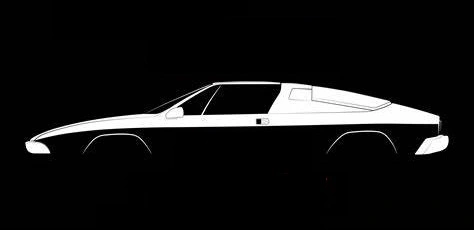




A Radical Ray of the 1980s Sun
History : A Concept Born from Crisis
The Lamborghini Athon made its debut at the 1980 Turin Auto Show, during one of the most turbulent periods in Lamborghini’s history. With the company struggling financiallyand under the control of a bankruptcy receiver, Bertone stepped in to showcase that the spirit of innovation was far from extinguished. The Athon, named after the Egyptian
sun god, was a one-off concept designed to keep Lamborghini’s name in the spotlight—and to hint at the brand’s futuristic potential. Though it never entered production, the
Athon stood as a symbol of resilience and design daring during a dark chapter for the marque.
Design : Sun-Kissed Geometry
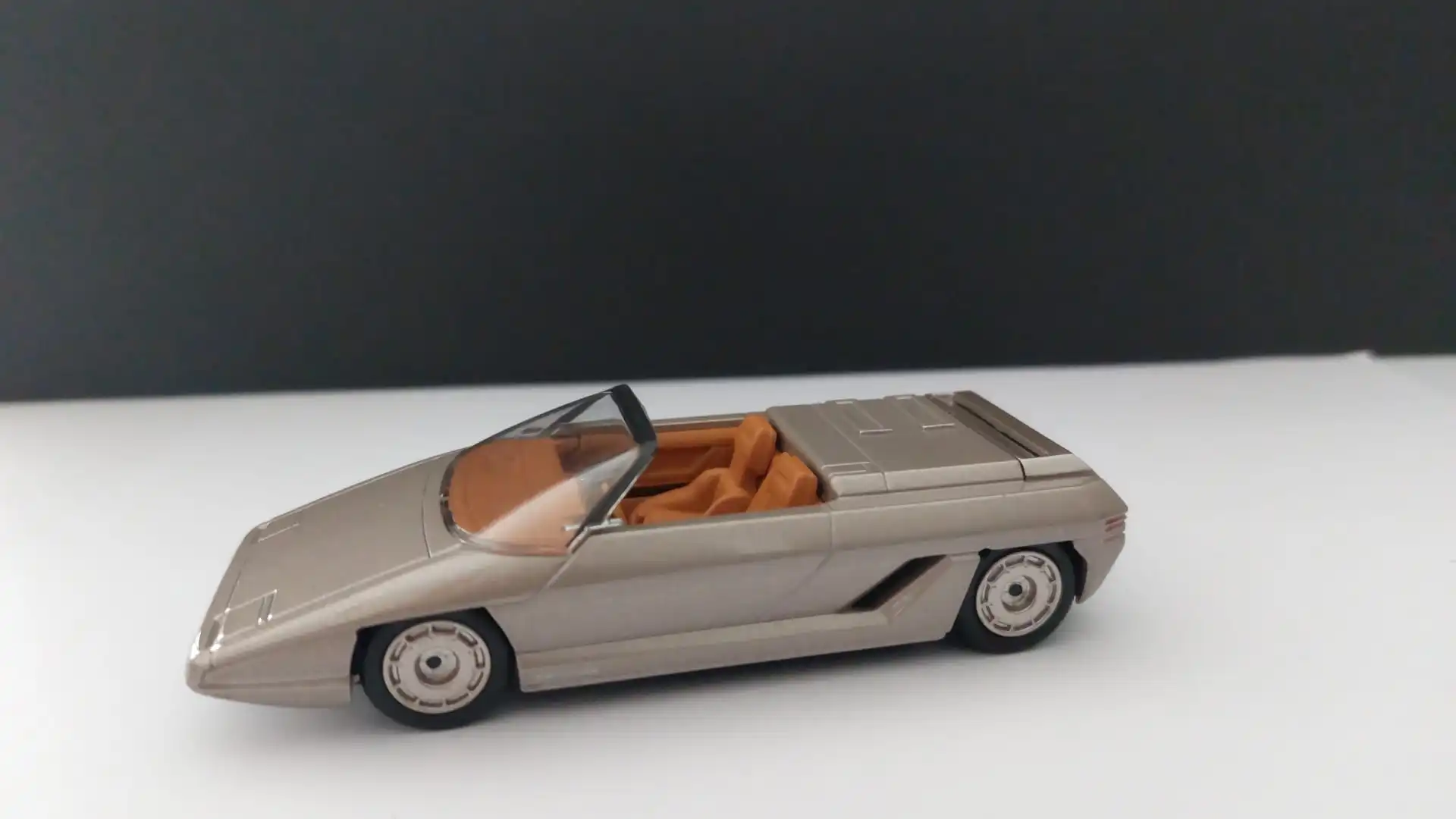
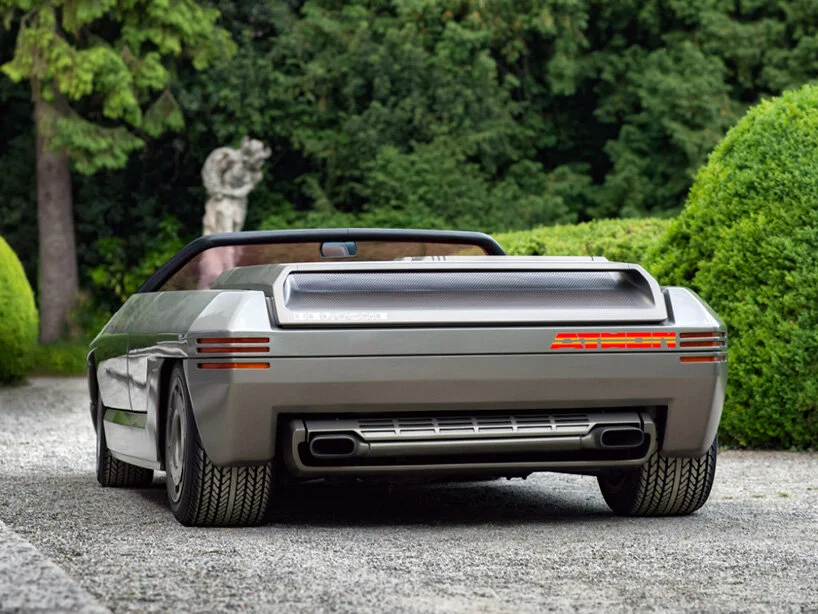
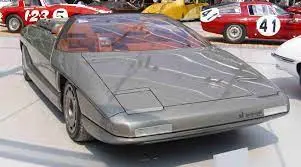
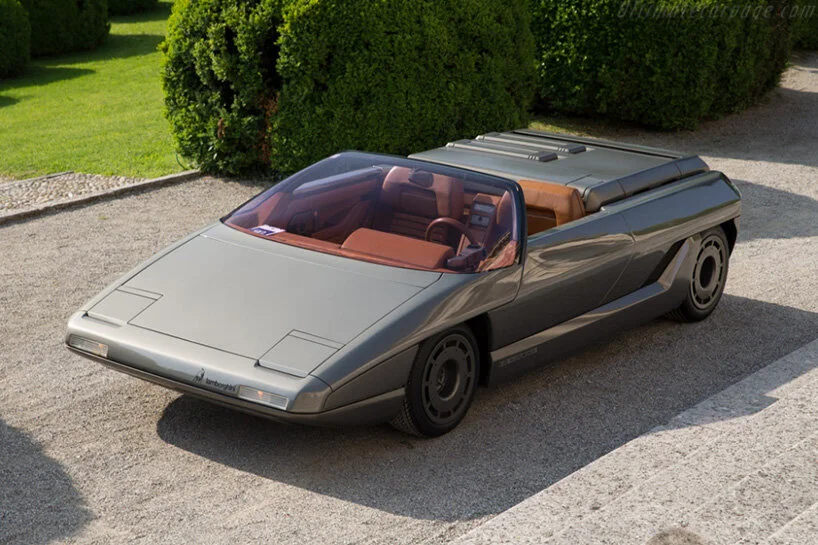
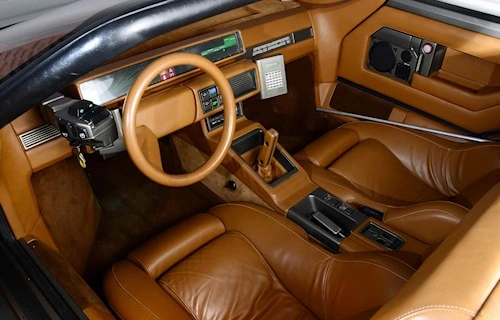
Marc Deschamps of Bertone took the lead in shaping the Athon’s futuristic aesthetic. The wedge-shaped body, flat surfaces, and angular lines were pure 1980s concept car vocabulary,but the Athon pushed even those boundaries. With its barchetta-style open cockpit and cantilevered dashboard wrapping around the driver, it felt more like a sci-fi spaceship than a
traditional roadster. The distinctive rear deck with its layered, geometric slats and the retractable headlamps added to the visual drama. Despite being a static prototype, the Athon
was fully drivable—and remarkably, it even had a complete digital instrument panel, decades ahead of its time.
Driving Experience : Conceptual, Yet Functional
Though the Athon was primarily a design study, it wasn’t just a showpiece. Underneath its sculptural bodywork was the chassis and running gear of the Lamborghini Silhouette, includingthe 3.0L V8 engine producing around 260 horsepower. The car was fully operational and could be driven, a rare trait among concept cars of the era. That said, its low stance, open cockpit,
and futuristic controls would have made it feel more like piloting a machine from a science fiction film than a weekend cruiser. It was a rolling statement, not a production ready vehicle
but it offered a brief, real-world taste of Lamborghini’s future-thinking DNA.
Fun Facts : More Than a Pretty Face
- The Athon’s name comes from Aton, the ancient Egyptian sun god, symbolizing light and rebirth—fitting for a concept car born in Lamborghini’s darkest years.
- The Athon was auctioned in 2011 at Villa d’Este for €347,200 and remains in private hands today, still beautifully preserved.
- It featured one of the earliest uses of a digital instrument cluster in a Lamborghini-branded vehicle.
- Despite its fully functional powertrain, the Athon was never intended for road use or homologation.
- The dashboard was asymmetrical, with most of the controls tilted toward the driver—a design trait that influenced future interiors.
Legacy : The Concept That Dared to Dream
The Lamborghini Athon didn’t just represent a technical and stylistic experiment—it was a statement of survival. At a time when Lamborghini was on the brink, the Athon reminded the worldthat design innovation and brand identity could endure. While it never directly inspired a production model, the Athon’s bold design language echoed in later Lamborghini concepts and
contributed to Bertone’s lasting design legacy. Today, it’s viewed as one of the most important concept cars from Lamborghini’s early 1980s era—a true design icon frozen in time.
Specifications
| Category | |
|---|---|
| Production | 1980 Turin Motor Show |
| Build | 1 unit |
| Designer | Marc Deschamps at Bertone |
| Engine | 3.0L V8, naturally aspirated from the Urraco |
| Power Output | 260 hp (194 kW) @ 7,500 rpm |
| Torque | 273 Nm (201 lb-ft) @ 5,750 rpm |
| Transmission | 5-speed manual |
| Drive Type | Rear wheel drive (RWD) |
| Acceleration (0-100 km/h / 0-62 mph) | Not known |
| Top Speed | Estimated 170+ km/h (106+ mph) |
| Length | 3880 mm (152.8 in) |
| Width | 1880 mm (74.0 in) |
| Height | 1070 mm (42.1 in) |
| Wheelbase | 2450 mm (96.5 in) |
| Weight | 1200 kg (2646 lbs) |
| Fuel Capacity | Approx. 80 L (21.1 US gal) |
| Wheel Type | Campagnolo alloy wheels |
| Front and rear tires | 195/50 VR15 (front) - 285/40 VR15 (rear) |
| Tires | Pirelli P7 |
| Chassis | Steel monocoque, based on Lamborghini Silhouette |
| Front Suspension | Independent, double wishbones |
| Rear Suspension | Independent, double wishbones |
| Brakes | Ventilated disc brakes (front & rear) |