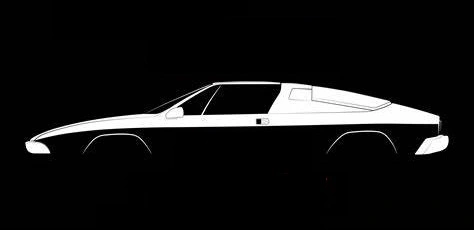




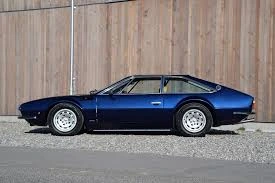
The V12 Grand Tourer with Style and Substance
History : Refined V12 Power Meets Grand Touring Elegance
In the late 1960s and early 1970s, Lamborghini was experiencing a transition period. The radical Miura had changed the landscape of performance cars,and the Islero had brought luxury and elegance to the brand. Enter the Jarama: a model that represented Lamborghini’s dedication to crafting
powerful yet more refined grand tourers.
Introduced in 1970 as a replacement for the 400 GT, the Jarama was a more accessible, refined grand tourer. While it maintained the V12 engine Lamborghini
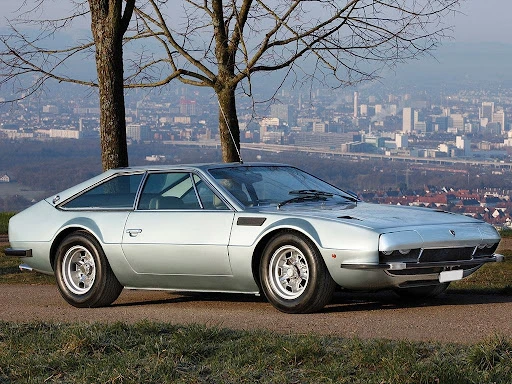
was known for, it brought a more practical, comfortable design compared to the sharp, aggressive lines of the Miura or the Islero. The Jarama, designed by
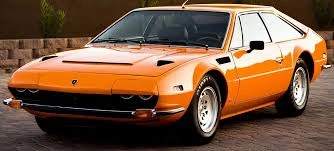
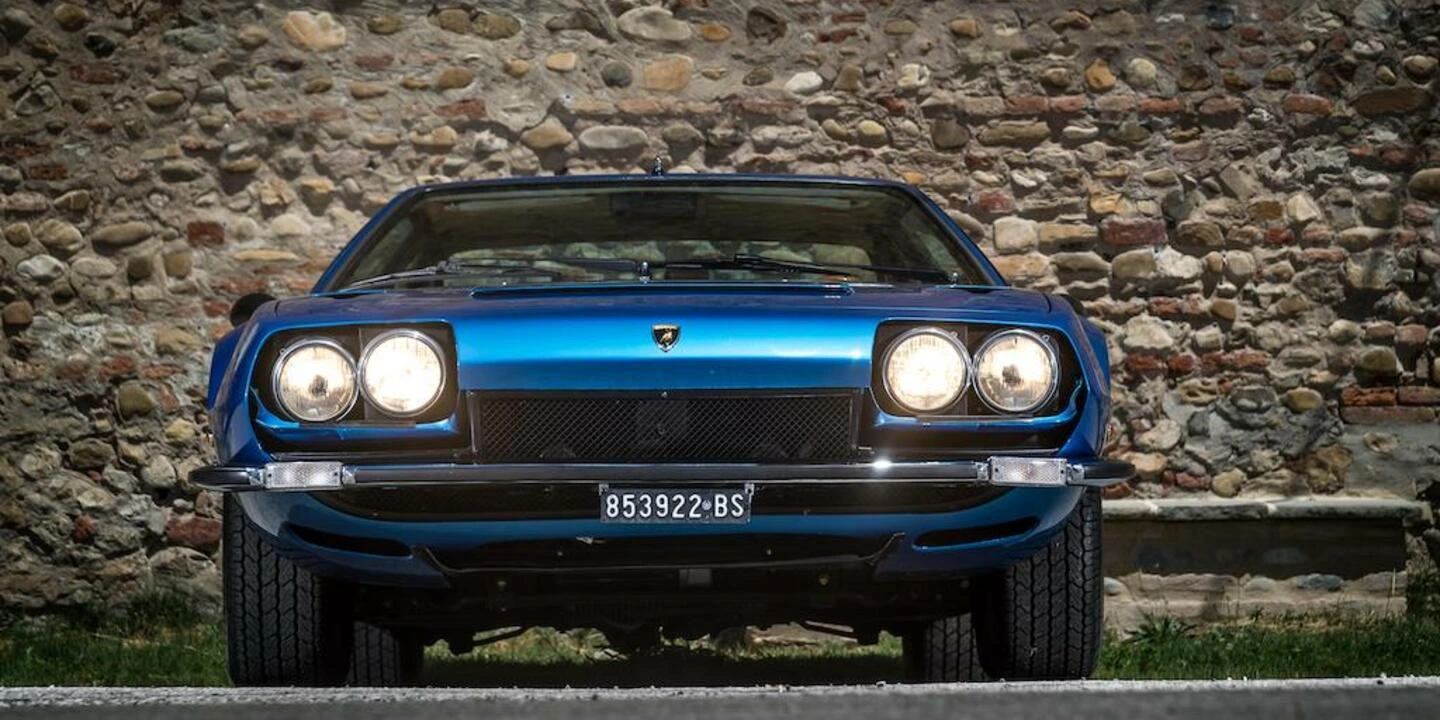
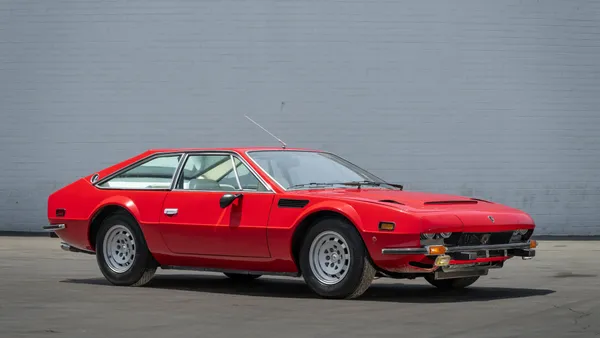
the famous Marcello Gandini at Bertone, showcased a more restrained aesthetic, with a wide front grille, a low, muscular stance, and a sleek rear.
The Jarama’s name was inspired by the Spanish bullfighting tradition — named after a region in Spain known for breeding fighting bulls, continuing Lamborghini's
legacy of naming cars after bulls.
Design : Balanced Proportions and Refined Luxury
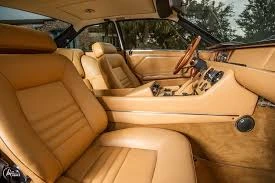
The design of the Jarama was less extreme than its predecessors but still carried the hallmark Lamborghini traits. The car featured a more practical two-plus-two layout,allowing it to accommodate four people in relative comfort. The interior offered a high level of refinement with leather upholstery, a classic dashboard, and ample space
for a grand tourer.
The body, designed by Gandini, was a harmonious blend of smooth curves and sharp lines, giving the Jarama an athletic look without being overly aggressive.
The interior was designed with comfort in mind, with a well-equipped dashboard and spacious cabin, making it a perfect companion for road trips.
The car’s proportions were balanced, making it a true grand tourer in terms of both performance and design.
Driving Experience : V12 Power Combined with Comfort and Practicality
Under the hood, the Jarama kept true to Lamborghini’s philosophy of raw, unrelenting power. It featured the same 3.9L V12 engine found in the Islero, though inthe case of the early models (Jarama 400 GT), it was tuned to produce 350 hp. This engine allowed the car to achieve a top speed of 260 km/h (162 mph) and
accelerate from 0-100 km/h in just over 6 seconds—a remarkable feat for a car of its size and luxury.
In 1972, the Jarama received an update with the 400 GTS variant. The revised version received a bump in power to 365 hp and improved handling, making it even
more capable on the road.
The Jarama was designed to be driven long distances, providing both comfort and performance. While it may not have had the same raw, visceral experience as the Miura,
the Jarama offered a smoother, more relaxed ride without sacrificing the power Lamborghini was known for. The V12 engine provided plenty of grunt,
and the car’s suspension system ensured it was comfortable on longer journeys.
The Jarama’s handling was precise but more forgiving compared to other Lamborghinis of the time, making it easier to drive in everyday conditions.
Fun Facts : Details that Reveal its Unique Character
- The Jarama was one of the last Lamborghini models to use the 3.9L V12 engine before the company moved to larger displacement engines in future models.
- The 400 GTS variant was the more refined and higher-performing version, designed for enthusiasts seeking even more power and handling.
- The Jarama was never meant to be a track car; rather, it was a high-performance grand tourer built for long, comfortable drives at high speeds.
- The Jarama’s interior was designed for long trips, with ample legroom and a simple yet elegant dashboard layout.
Legacy : The Quiet Star of Lamborghini Grand Tourers
Despite its performance capabilities and sophisticated design, the Lamborghini Jarama never gained the same fame as the Miura or Countach. Production numberswere relatively low, with only around 328 units of the 400 GT and 150 units of the 400 GTS produced. Still, it holds a special place in Lamborghini’s history
as a grand tourer that represented the brand’s ability to create a refined yet high-performance vehicle.
Today, the Jarama is considered one of the more underrated classic Lamborghinis, often overshadowed by more flamboyant models.
However, it is regarded by enthusiasts as a classic example of Lamborghini’s craftsmanship and design philosophy.
A Collector's Dream
Today, the Lamborghini Jarama is a rare gem for collectors, offering a perfect blend of luxury, performance, and classic Lamborghini design. While it may not be as famousas other models, its rarity, understated elegance, and V12 power make it a highly sought-after vehicle among those who appreciate the finer things in automotive history.
Specifications
| Category | |
|---|---|
| Production | 1970 – 1976 |
| Build | Jarama 176 units Jarama S 152 units |
| Designer | Marcello Gandini (Bertone) |
| Engine | 3.9 L (3929 cc) V12, DOHC |
| Power Output | Jarama 350 hp (261 kW) @ 7,500 rpm Jarama S 365 hp (272 kW) @ 7,500 rpm |
| Torque | 400 Nm (295 lb-ft) @ 5,500 rpm |
| Transmission | 5-speed manual (some Jarama S had optional auto) |
| Drive Type | Rear wheel drive (RWD) |
| Acceleration (0-100 km/h / 0-62 mph) | Approx. 5.4 seconds |
| Top Speed | ~245 km/h (152 mph) |
| Length | 4475 mm (176.2 in) |
| Width | 1820 mm (71.7 in) |
| Height | 1250 mm (49.2 in) |
| Wheelbase | 2380 mm (93.7 in) |
| Weight | 1450 kg (3197 lbs) |
| Fuel Capacity | 80 L (21.1 US gallons) |
| Wheel Type | 15 inch Campagnolo alloy wheels |
| Front and rear tires | 215/70 VR15 |
| Tires | Originally fitted with Pirelli Cinturato or Michelin XWX |
| Chassis | Steel monocoque with front subframe |
| Front Suspension | Independent, double wishbones, coil springs, anti-roll bar |
| Rear Suspension | Independent, double wishbones, coil springs, anti-roll bar |
| Brakes | 4-wheel disc brakes (front and rear) |