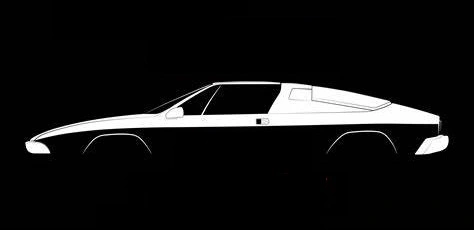





When Hybrid Meets Sant’Agata DNA
History : When Tradition Met the Future
Unveiled at the 2014 Paris Motor Show, the Lamborghini Asterion marked a bold and unexpected step for Lamborghini. At a time when the brand was synonymouswith raw, naturally aspirated V10 and V12 engines, the Asterion introduced something entirely new: hybrid technology.
Named after Asterion, the mythical half-man, half-bull creature from Greek mythology, the concept perfectly symbolized its dual nature—combining combustion
power with electric innovation. It wasn’t just a design exercise; it was Lamborghini’s way of exploring how electrification could coexist with the brand’s DNA
of performance and emotion.
Although it was never intended for production, the Asterion served as a technological and philosophical testbed, paving the way for Lamborghini’s future electrified models.
Design : Elegance Over Aggression
Unlike the sharp, aggressive lines seen on models like the Aventador or Huracán, the Asterion took a more refined and fluid approach. Its design language leanedtoward elegance rather than intimidation, signaling a different kind of Lamborghini—one that could be driven daily without sacrificing presence.
The front featured softer lines and a more understated interpretation of Lamborghini’s signature Y-shaped lighting, while the rear remained clean and sophisticated,
avoiding excessive aerodynamic drama. Bronze-colored accents subtly highlighted its hybrid identity, distinguishing it from traditional models.
Inside, the cabin was a departure from the usual fighter-jet inspiration. Instead, it embraced a luxurious, almost lounge-like atmosphere, with high-quality leather,
aluminum details, and a user-friendly layout. It was clear: the Asterion was designed with comfort and usability in mind, not just performance.
Driving Experience : Silent Power Meets V10 Emotion
At the heart of the Asterion was a naturally aspirated 5.2-liter V10 engine paired with three electric motors, delivering a combined output of 910 horsepower.This setup allowed the car to operate in full electric mode for short distances, offering a quiet and surprisingly smooth driving experience—something unheard of
for a Lamborghini at the time.
But the true magic came when both power sources worked together. The instant torque from the electric motors combined with the high-revving V10 created a seamless
surge of acceleration, blending efficiency with exhilarating performance.
The Asterion could reach 100 km/h in just 3.0 seconds and had a top speed of 320 km/h, proving that hybrid technology didn’t mean compromising on speed or excitement.
It was a glimpse into a future where performance and sustainability could coexist.
Fun Facts : The Unexpected Lamborghini
- The Asterion was the first Lamborghini to feature plug-in hybrid technology, making it a historic milestone for the brand.
- Its name follows Lamborghini’s tradition of bull-related references, but with a mythological twist—Asterion was not a fighting bull,
but a creature symbolizing duality, perfectly reflecting the car’s hybrid nature. - Interestingly, the Asterion was designed with everyday usability in mind, including features like a more comfortable ride and a practical
interior—qualities rarely prioritized in Lamborghini concepts. - Despite the excitement it generated, Lamborghini executives made it clear from the beginning that the Asterion would remain a concept,
focusing instead on hybrid technology for future supercars rather than grand tourers.
Legacy : The Blueprint for Electrified Lamborghinis
While the Asterion never reached production, its influence can be clearly seen in Lamborghini’s modern direction. It laid the groundwork for the brand’s hybrid future,eventually leading to models like the Sián and the Revuelto.
More importantly, it proved that electrification could enhance, rather than dilute, the Lamborghini experience. The Asterion challenged perceptions and opened the door
to a new era, one where innovation and tradition could coexist without compromise.
Today, the Asterion stands as a visionary concept, a turning point that showed Lamborghini was ready to embrace the future while staying true to its unmistakable identity.


Specifications
| Category | |
|---|---|
| Presented | 2014 Paris Motor Show |
| Build | 1 unit |
| Designer | Mitja Borkert, Head of Design |
| Engine | 5.2L naturally aspirated V10 3 electric motors |
| Power Output | 910 hp |
| Torque | 720 Nm (combined) |
| Battery | Lithium-ion battery |
| Electric only range | 50 km (31 miles) |
| Transmission | 7-speed dual-clutch |
| Drive Type | All-wheel drive (electric front axle) |
| Acceleration (0-100 km/h / 0-62 mph) | 3.0 |
| Top Speed | 320 km/h (199 mph) |
| Length | 4,700 mm (185.0 in) |
| Width | 1,970 mm (77.6 in) |
| Height | 1,117 mm (44.0 in) |
| Wheelbase | 2,800 mm (110.2 in) |
| Weight | 1,800 kg (3,968 lbs) (est.) |
| Fuel Capacity | 85 liters (estimated) |
| Wheel Type | Alloy wheels |
| Front and rear tires | 245/35 ZR20 (front) - 305/30 ZR21 (rear) |
| Tires | |
| Chassis | Carbon fiber monocoque with aluminum subframes< |