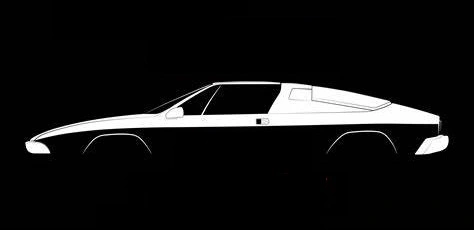




The Engineer Behind Lamborghini’s Experimental Spirit
From Engineering to Innovation
Mario Marazzi was one of the lesser-known but highly important technical minds connected to Lamborghini during the company’s formative decades. Unlike celebrated
stylistic designers such as Marcello Gandini, Marazzi’s contribution came primarily from the engineering and development side of the company. His work helped explore
ambitious concepts that pushed far beyond traditional grand touring cars.
During the late 1970s and 1980s, Lamborghini was experimenting with military vehicles, luxury off-road concepts, and unconventional prototypes. Mario Marazzi became
involved in several of these technical projects, helping transform bold ideas into functional engineering studies. His work reflected Lamborghini’s willingness to explore
entirely new segments while still maintaining the brand’s dramatic character.
Engineering the LM Legacy
Mario Marazzi is most commonly associated with Lamborghini’s experimental off-road and utility vehicle development programs. These projects eventually evolved into the
legendary LM series, beginning with the Lamborghini Cheetah and later leading to vehicles such as the Lamborghini LM001 and the production-ready Lamborghini LM002.
These vehicles were technically demanding and radically different from Lamborghini’s traditional supercars. The challenge was not simply styling a dramatic body, but
engineering a machine capable of handling rough terrain, high power outputs, military-grade durability, and extreme environments. Marazzi contributed to the development
philosophy behind these vehicles, helping Lamborghini establish a reputation for engineering experimentation outside the world of exotic road cars.
The LM projects became famous for combining enormous V12 engines with rugged off-road capability, something almost unheard of during the era. Although initially developed
with military ambitions, the final LM002 became an icon of luxury performance SUVs long before the segment became mainstream.
A Technical Mind Behind the Scenes
Unlike some of Lamborghini’s headline designers, Mario Marazzi largely worked behind the scenes. His role focused more on solving mechanical and structural challenges than
on public-facing styling work. This makes his legacy less visible to the general public, but deeply respected among enthusiasts interested in Lamborghini’s engineering history.
The experimental period in which Marazzi worked was financially unstable yet creatively fearless. Lamborghini explored concepts ranging from military vehicles to futuristic prototypes,
and engineers like Marazzi were essential in turning ambitious ideas into working machines. Without this technical expertise, many of the company’s boldest concepts would never have
progressed beyond sketches and proposals.
Lamborghini Beyond the Supercar
Mario Marazzi’s contribution represents an important chapter in Lamborghini history: the moment the company dared to become more than a builder of low-slung exotic sports cars. The
LM projects demonstrated that Lamborghini engineering could adapt to entirely different purposes while still retaining the brand’s signature excess and performance.
Today, vehicles such as the Lamborghini Urus owe part of their heritage to the experimental groundwork laid decades earlier. While designers often receive the spotlight, engineers
like Mario Marazzi helped shape the technical foundation that allowed Lamborghini to expand its identity far beyond the traditional supercar formula.
Even if his name is less widely recognized, Mario Marazzi remains an important figure in Lamborghini’s adventurous and unconventional history.
Some of the models designed by Mario Marazzi :
Lamborghini Islero
This is the car most directly associated with Mario Marazzi as a designer. After the collapse of Carrozzeria Touring, Lamborghini turned to Carrozzeria Marazzi to create the successor
to the 400 GT. Mario Marazzi helped style and build the Islero, giving it a cleaner and more angular appearance that marked the transition from rounded 1960s GT styling to the sharper
lines of the 1970s.
Lamborghini Islero S
The updated Islero S (or GTS) featured revised bodywork, flared arches, cooling vents, and a more aggressive appearance. Marazzi and his company handled the evolution of the design
and production.
Lamborghini Jarama
Carrozzeria Marazzi assembled the first Jarama bodies after the Islero. However, the actual exterior styling is generally credited to Marcello Gandini at Bertone, not Mario Marazzi.
Marazzi’s role was more focused on construction and body production.
Lamborghini 400 GT 2+2
After Touring went bankrupt, Carrozzeria Marazzi completed part of the later 400 GT production series. Mario Marazzi was involved mainly from the coachbuilding and finishing side
rather than as the original stylist.
Alfa Romeo 33 Stradale
Carrozzeria Marazzi participated in the construction of several examples of the legendary Alfa Romeo 33 Stradale after problems arose with production capacity elsewhere. The stunning
design itself was created by Franco Scaglione, but Marazzi contributed to the handcrafted production work.
Alfa Romeo 90 Wagon
Marazzi created two station wagon prototypes based on the Alfa Romeo 90. These were experimental concept studies rather than production cars.
Fiat Punto Cabrio Wagon Bricò
One of the later experimental vehicles produced by Carrozzeria Marazzi. It combined convertible and wagon styling into a highly unusual prototype concept.
Other Specialized Vehicles
During the 1980s and 1990s, Carrozzeria Marazzi also produced:
Custom hearses based on Mercedes-Benz models
Armored versions of the Land Rover Discovery 3 for police use
Prototype work connected to the Alfa Romeo 8C Competizione Spider
Although Mario Marazzi is most remembered for the Lamborghini Islero, his broader legacy lies in the world of Italian coachbuilding — a period when small specialist companies could
still shape, build, and refine exotic automobiles by hand.